Stylish Cat Beds for the Living Room (2026)
Last updated: August 10, 2026 · Reading time: ~7 min · Research by HiPetTech editors
Quick answer: The best cat beds for living room spaces are designed to look like intentional decor — think boucle donuts, woven caves, and sleek window perches — so your cat’s resting spot enhances the room instead of clashing with it. In 2026 the standout designer name is Mau, whose minimalist forms double as sculpture, while window perch beds turn unused sunlight into a cat’s favorite seat. Our pick for most living rooms is a designer lounge bed that matches your sofa’s fabric.
If you are curating a cat-friendly interior, start with our pillar guide to aesthetic pet furniture for modern homes and then see our curated best picks for the full decor lineup. A living-room cat bed pairs naturally with a cat litter box enclosure furniture piece that hides the box in matching wood, and our best modern cat trees guide covers vertical options if your cat also climbs. For dogs sharing the same room, our guides to best orthopedic dog beds and calming dog beds for anxiety cover canine comfort in coordinated style.
Transparency note: This page contains Amazon affiliate links. If you buy through them, we may earn a commission at no extra cost to you. We only recommend products we genuinely believe are worth your money. Read our full disclosure →
- Stylish Cat Beds for the Living Room (2026)
- Quick Verdict: Stylish Cat Beds for the Living Room (2026)
- Cat Beds for Living Room: Designed to Belong
- Designer Spotlight: Mau
- Window Perch Beds: Sunlight as Design
- Materials That Match the Room
- Our 2026 Comparison Table
- Placement \& Multi-Cat Homes
- real downsides \& Who Should Skip
- FAQ
- Our Pick
- Closing Thoughts
Last checked: September 2026. Prices, availability and subscription terms change often — confirm the current price on Amazon before buying.
Quick Verdict: Stylish Cat Beds for the Living Room (2026)
- Best overall (designer lounge): Mau-style sculptural bed — minimalist forms, upholstery-quality fabrics, looks like furniture.
- Best for small rooms: Window perch bed — uses vertical space, zero floor footprint, cats love sun and height.
- Best for cozy modern: Boucle donut — soft, nubby, on-trend, pairs with modern sofas.
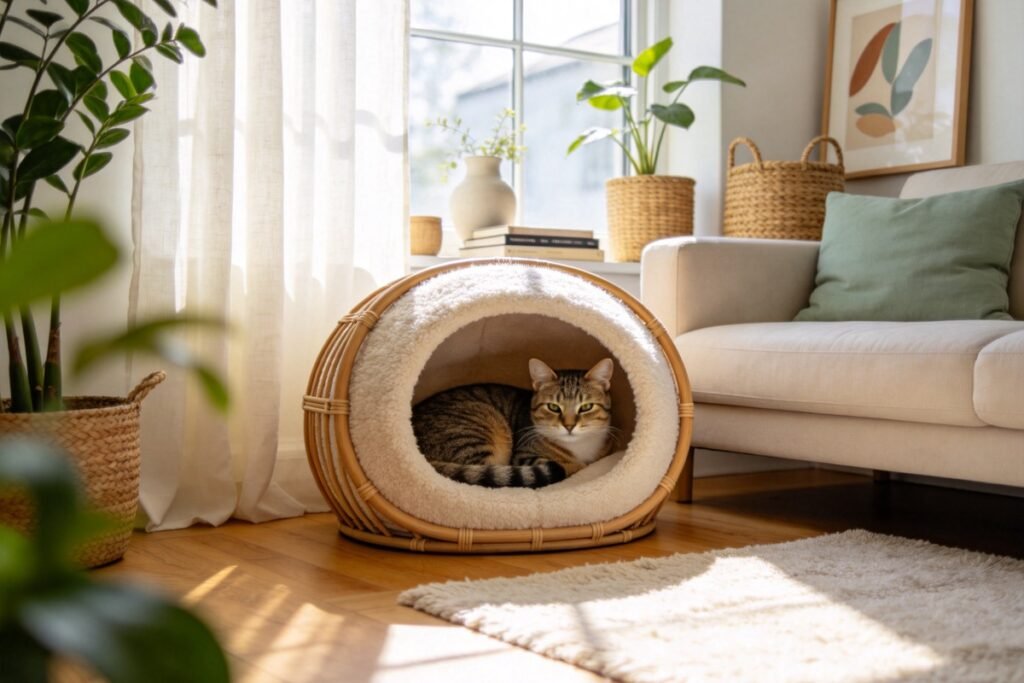
- Best for coastal/natural: Woven rattan cave — hides fur, structured basket shape, natural texture.
Best for: Indoor cats, design-led homes, sun-loving cats, multi-cat households needing varied resting spots, owners who want beds that look like decor. Not ideal for: Cats that only sleep on human furniture, heavy clawers that damage upholstery, or owners unwilling to maintain light-colored fabrics.
(Prices and stock can change; always verify on Amazon.)
Cat Beds for Living Room: Designed to Belong
Cats spend the majority of their day resting, and the living room is usually where the family (and the warmest window) is. Yet most cat beds are afterthoughts — neon pom-pom cushions or cartoon-shaped mats that fight the room’s palette. The stylish-cat-bed movement exists to fix that contradiction: the bed should be where the cat wants to be and where you are happy to look.
A living-room cat bed earns its place when it does three things:
- Attracts the cat — correct height, sun access, and a texture the cat actually uses.
- Complements the decor — fabric, color, and form that echo your sofa, rug, or shelving.
- Stays tidy — a structured shape that does not collapse into a sad lump.
The payoff is real. A well-chosen bed means the cat is not claiming the good armchair or shedding on the throw pillows; they have a designated, beautiful spot of their own. In homes where pet gear is otherwise hidden, a stylish bed can even become a conversation piece.
For the eating side of the same room, our aesthetic ceramic cat bowls guide keeps the feeding station just as considered.
Designer Spotlight: Mau
Mau is the brand most often cited when people ask for a cat bed that looks like design object rather than pet product. The line is built around clean geometry — cylindrical loungers, pod-like caves, and low elliptical trays — in muted, adult colorways (oat, charcoal, terracotta) with quality upholstery-style fabrics.
What sets Mau apart:
- Sculptural form. The beds read as small furniture — a cylinder lounge can sit beside a side table and look deliberate.
- Quality materials. Many use wool-blend or boucle-style covers with a substantial feel, closer to a decorative ottoman than a pet cushion.
- Modularity. Some designs include a removable inner cushion and a shell that doubles as a side table or planter-adjacent object.
- Cat approval. Despite the looks-first branding, the shapes support curling and leaning, which cats use.
The plain trade-off is price and delicacy: Mau beds are a design investment and the upholstery demands gentle care; they are not for a cat that claws fabric or a home with frequent washing needs. But for a style-led living room, they are the reference point.
(Prices and stock can change; always verify on Amazon.)
If your cat ignores floor beds, the next section — window perches — may be the answer.
Window Perch Beds: Sunlight as Design
Not every stylish cat bed sits on the floor. The window perch is the clever living-room solution that uses vertical, otherwise-dead space: a cushioned shelf mounted to the window frame (or a suction-cup pad on the glass) where the cat can bask in sun and watch the world.
Why perches work so well in living rooms:
- Cats love height and light. A sunny perch satisfies the instinct to survey territory from above while warming up.
- Zero floor footprint. In small living rooms, a window perch adds cat comfort without sacrificing floor space.
- Visual lightness. A slim cushioned bracket reads as a shelf, not clutter.
Design considerations:
- Choose a perch with a washable cushion and a neutral frame (wood or white metal) to match trim.
- Confirm weight rating against your cat’s size; multi-cat homes need a sturdier bracket.
- Mount to a window the cat already frequents, and avoid blocking operating hardware you need to open.
For a fuller vertical plan, our wall-mounted cat shelves guide extends the perch concept into a climbing route along the wall.
Materials That Match the Room
The “stylish” half of a stylish cat bed lives in the material. Match the bed to your existing furniture language:
- Boucle / teddy: Soft, nubby, on-trend; pairs with modern sofas and reads cozy. Great for donut loungers.
- Woven seagrass or rattan: Natural, coastal, hides fur; best as a structured cave or basket bed.
- Wool-blend felt: Minimalist and sculptural; the Mau aesthetic.
- Velvet: Luxe, color-saturated; matches a glam living room but shows claw marks.
- Cotton canvas: Casual, washable, Scandi; less plush but practical.
Color strategy: Either match the bed to a dominant neutral (oat, grey, cream) so it disappears, or pick one accent that already appears in the room (terracotta, sage) so it feels intentional. Avoid clashing primaries unless your decor is explicitly playful. A useful trick is to repeat the bed’s material elsewhere — a boucle bed next to a boucle throw, or a rattan cave beside a rattan side table — so the eye reads the cat bed as part of a deliberate styling scheme rather than a stray pet item.
A structured bed holds its shape and looks designed even when empty; a floppy cushion can look like laundry. Prioritize form retention.
Pair the bed’s material with a pet-friendly sofa in a complementary tight-weave fabric so the whole seating zone reads coordinated.
Our 2026 Comparison Table
| Bed Type | Look | Footprint | Best For | Check Price |
|---|---|---|---|---|
| Designer lounge (Mau) | Sculptural | Floor | Style-led rooms | |
| Window perch | Minimal shelf | Wall/window | Sun-lovers, small rooms | |
| Woven cave | Natural basket | Floor | Coastal, privacy | |
| Boucle donut | Soft, trendy | Floor | Cozy modern |
Use the links for live pricing, since designer items promotionally vary.
Placement \& Multi-Cat Homes
Even the prettiest bed fails if placed wrong. Cats choose beds by feel and location, not by looks.
Placement Rules
- Sunny and quiet: Near a window but not in a high-traffic walkway.
- Slightly elevated: A bed on a low bench or shelf feels safer than one on the floor for many cats.
- Away from the litter box: Cats avoid resting near where they eliminate; keep beds and a litter enclosure separated by sightline and distance.
- Near you: Living-room beds work because the cat wants to be where the family is.
Multi-Cat Homes
- Provide one bed per cat plus one extra to avoid resource guarding; cats rarely share a favorite spot.
- Vary heights — a floor donut for one, a window perch for another — to let them choose.
- Match beds to personalities: A shy cat may prefer an enclosed cave, a confident cat an open lounge.
Our large cat tree for multiple cats guide helps when floor space for many beds is limited and vertical territory is the better answer.
real downsides \& Who Should Skip
Straight talk:
Cats Are Unpredictable
A premium designer bed can be ignored in favor of a cardboard box. Mitigate by placing the bed well and using a familiar-smelling blanket initially.
Upkeep
Light-colored boucle and wool show fur and dirt; expect regular lint-rolling. If you will not maintain it, choose a darker, washable material.
Claw Damage
Cats that scratch fabric will mark an upholstered designer bed. Provide a cat tree or scratcher nearby to redirect.
Cost vs Use
A purely decorative bed your cat won’t use is wasted spend; confirm your cat’s preferences (cave vs open, high vs low) before buying the expensive option.
Who Should Skip
- If your cat only sleeps on your sofa or bed, a stylish bed may go unused
- Start with a washable, inexpensive option to test the habit first
Our aesthetic pet furniture pillar ties the bed into a full room plan.
FAQ
What makes a cat bed stylish enough for the living room?
A stylish living-room cat bed uses deliberate form and decor-grade materials — boucle, wool-blend, woven rattan, or velvet — in muted, room-matching colorways, and holds a structured shape so it looks like furniture even when empty. Designer brands like Mau treat the bed as a small sculptural object. The goal is a piece the cat uses and you are happy to display, not a cartoonish pet cushion that clashes with the room.
Are Mau cat beds worth the price?
For a style-led home, yes, if your cat actually uses a floor lounge. Mau beds offer sculptural, furniture-quality forms and adult colorways that elevate a room, and they are built with substantial upholstery. The downsides are price and delicate care, and they suit gentle, non-clawing cats. If you are unsure your cat will use it, test with a cheaper boucle donut first before investing in the designer piece.
Where should I put a cat bed in the living room?
Place it near a sunny window but out of the main walkway, slightly elevated if possible, and away from the litter area and loud appliances. Cats choose beds by location and comfort, so a quiet, warm, family-adjacent spot works best. A window perch uses vertical space in small rooms. Keep the bed stable and add a familiar-smelling blanket to encourage first use.
Do cats prefer window perch beds?
Many do, because cats naturally seek height, warmth, and a view, and a sunny window perch delivers all three while using zero floor space. They are ideal for small living rooms and sun-loving cats. Confirm the mount’s weight rating and choose a washable cushion. Not every cat uses a perch — shy or arthritic cats may prefer a low, enclosed bed — so offer a choice when space allows.
How do I stop a cat bed from clashing with my decor?
Match the bed’s material and color to existing furniture: boucle with a modern sofa, rattan with coastal decor, wool-blend for minimalism. Either echo a dominant neutral so the bed disappears or pick one accent already in the room so it feels intentional. Choose a structured shape that holds form, and coordinate it with a litter enclosure and cat tree in the same language for a cohesive look.
Our Pick
For most living rooms, our pick is a designer lounge bed (Mau-style) in a neutral boucle or wool-blend that echoes your sofa — it is the piece that looks intentional and gives the cat a true spot of their own. If floor space is tight or your cat loves sun, add a window perch as the smart second choice. Match material to the room, and let the cat vote with usage.
(Prices and stock can change; always verify on Amazon.)
Closing Thoughts
A stylish cat bed proves a living room can be both cat-friendly and beautifully designed. Choose the material first, the placement second, and your cat may finally vacate the good armchair. Subscribe via HiPetTech’s about page for new decor and cat-comfort comparisons.
Disclosure \& Transparency
This post contains affiliate links to Amazon and other retailers. As an Amazon Associate, we earn from qualifying purchases at no extra cost to you. This site is research-based: recommendations are built from brand specifications, large-scale user reviews, long-term feedback in pet communities, and reliability signals such as firmware updates and parts availability. We do not claim personal in-house testing of every unit. Prices and stock levels can change at any time; always verify on the retailer’s page before purchasing. Read our full editorial and affiliate policy →
这是第 6 篇的完整优化稿。