Cat Litter Box Enclosure Furniture (2026 Hidden Litter Boxes)
Last updated: August 7, 2026 · Reading time: ~8 min · Research by HiPetTech editors
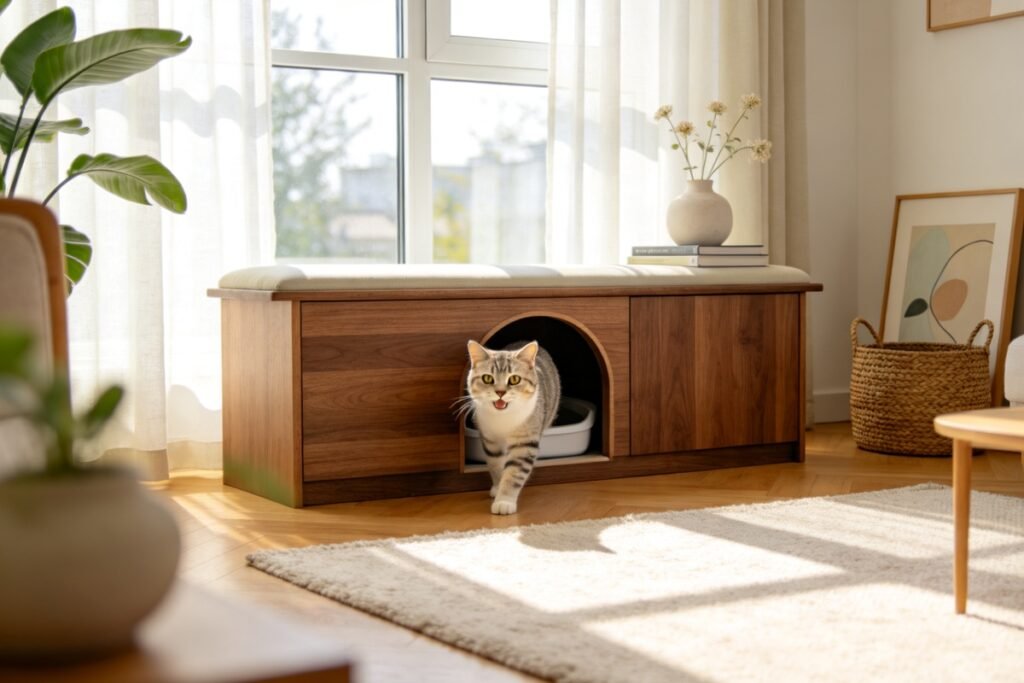
Cat litter box enclosure furniture hides an open litter box inside a bench, cabinet, or side table so the tray disappears from view and the room stops smelling like a utility closet. In 2026 the strongest options — Tucker Murphy Pet benches and the Amazon Basics hidden litter box enclosure — wrap the pan in wood-grain or painted panels, add a charcoal filter vent to cut odor, and give you a surface for plants or decor. You get a tidier living room and a cat that still has a private, low-stress bathroom.
If you’re building a decor-first home for your pets, start with our pillar guide to aesthetic pet furniture for modern homes, then circle back to pair a hidden box with a modern cat tree so the whole cat corner looks intentional rather than improvised.
Transparency note: This page contains Amazon affiliate links. If you buy through them, we may earn a commission at no extra cost to you. We only recommend products we genuinely believe are worth your money. Read our full disclosure →
- Cat Litter Box Enclosure Furniture (2026 Hidden Litter Boxes)
- Quick Verdict: Cat Litter Box Enclosure Furniture (2026)
- Why Hide the Litter Box in Furniture
- What to Look for in Litter Box Enclosure Furniture
- Best Hidden Litter Box Enclosures of 2026
- Comparison Table
- Odor Control and the Charcoal Filter
- Styling and Placement
- Types of Litter Box Enclosure Furniture
- Introducing Your Cat to a Hidden Box
- Cleaning and Filter Replacement Schedule
- Who Should Skip This
- FAQ
- Our Pick
- Closing Thoughts
Last checked: September 2026. Prices, availability and subscription terms change often — confirm the current price on Amazon before buying.
Quick Verdict: Cat Litter Box Enclosure Furniture (2026)
- Best overall (furniture look): Tucker Murphy Pet Hidden Litter Box Bench — wood-grain cabinet, lift-top for easy scooping, charcoal filter vent, blends with living-room furniture.
- Best budget (value path): Amazon Basics Hidden Litter Box Enclosure — no-frills, budget-friendly, charcoal-filtered vent, clean surface on top.
- Best for odor/scooping relief: Consider going automated with a self-cleaning unit like Litter-Robot 4 — handles waste automatically, may remove need for furniture camouflage.
- Best for multi-cat homes: Two enclosures rather than one oversized unit — distributed boxes smell less and reduce queuing stress.
Best for: Owners who want to hide the litter box from view, small apartments where every inch counts, multi-cat households needing odor control, design-conscious homes. Not ideal for: Very large cats using jumbo boxes, cats that dislike enclosed spaces, owners who want “never scoop again” (get self-cleaning instead), or tight budgets needing maximum function per dollar.
(Prices and stock can change; always verify on Amazon.)
Why Hide the Litter Box in Furniture
An exposed litter box is the fastest way to make a nice room feel like a back hallway. The tray, the scattered litter, and the smell all read as “unfinished.” A litter box enclosure furniture piece fixes that in one move: the box drops into a contained cavity, the cat enters through a side or front cutout, and the exterior looks like a bench or cabinet you’d buy anyway.
The benefit isn’t only visual. Containing the box cuts tracked litter on the floor and buffers odor at the source. For multi-cat homes, a hidden box also lowers visible “bathroom traffic,” which reduces the territorial stress that drives some cats to avoid the box altogether. And because these pieces double as seating or surface space, they earn their square footage in small apartments where every inch counts.
What to Look for in Litter Box Enclosure Furniture
Judge an enclosure on interior size, entry style, ventilation, material, and how easy it is to clean.
Interior Dimensions
Measure your litter box first, then confirm it fits with room to spare for the cat to turn and scratch. Many enclosures look big outside but run tight inside; a standard 18×24 inch pan is the practical ceiling for most benches. If you use a jumbo or automated box, check the cavity before buying — see our Litter-Robot 4 review for dimensions if you’re considering going automated instead.
Entry Style
Side-entry cutouts are most popular and feel private to the cat. Top-entry enclosures reduce tracking further but exclude senior cats or those with arthritis. A front-opening door with a cutout is the easiest compromise and simplifies cleaning.
Ventilation and Filter
A charcoal filter in the vent is the key odor feature. Charcoal (activated carbon) adsorbs odor molecules as air passes through, buying you a day or two between full cleans. Confirm the enclosure includes a replaceable filter and that spares are easy to find — you’ll swap them every few weeks.
Material
Painted MDF and wood-grain engineered board dominate. Look for a wipe-clean interior (a removable, waterproof mat or tray helps) since accidents happen. Avoid enclosures with carpeted interiors; they trap odor and are nearly impossible to sanitize.
Cleaning Access
The whole point fails if cleaning is a struggle. Pick a model with a large top or side that lifts fully open, and keep a handheld vacuum nearby for litter the cat drags out.
For cats that share the room with dogs, a bench with a lockable door keeps nosey pups out — and pairs nicely with orthopedic dog beds elsewhere in the space.
Best Hidden Litter Box Enclosures of 2026
Tucker Murphy Pet Hidden Litter Box Bench
Tucker Murphy Pet builds the bench-style enclosure most often cited as “looks like real furniture.” The wood-grain cabinet hides a full pan, the top lifts for easy scooping, and a side cutout gives the cat a private entrance. The charcoal filter vent keeps odor down, and the flat top holds a plant or books. It’s the pick when you want the piece to blend with existing living-room furniture rather than announce itself as a litter box.
(Prices and stock can change; always verify on Amazon.)
Amazon Basics Hidden Litter Box Enclosure
Amazon Basics delivers a no-frills, budget-friendly enclosure that does the core job: it hides the box, vents through a charcoal-filtered panel, and provides a clean surface on top. The finish is simpler than Tucker Murphy’s, but the value is hard to beat for a first enclosure or a spare bathroom. Assembly is straightforward and the proportions suit a standard pan.
(Prices and stock can change; always verify on Amazon.)
Bonus Consideration: Going Automated
If odor and scooping are your real enemies, a hidden enclosure is a halfway step. A self-cleaning unit such as the Litter-Robot 4 handles waste automatically and may remove the need for furniture camouflage entirely. Our automatic litter box for multiple cats guide weighs that trade-off for busier households.
(Prices and stock can change; always verify on Amazon.)
Comparison Table
| Feature | Tucker Murphy | Amazon Basics |
|---|---|---|
| Style | Wood-grain bench | Simple enclosure |
| Charcoal filter | Yes | Yes |
| Top surface | Usable bench | Usable top |
| Best for | Blending in | Budget |
| Cleaning access | Lift-top | Lift-top |
For more decor pairings, browse our best pet decor picks, which groups hidden boxes with pet-friendly sofas and stylish cat beds for the living room.
Odor Control and the Charcoal Filter
The charcoal filter is the feature that makes an enclosure livable. Activated carbon works by trapping odor molecules in its porous surface as air moves through the vent; it doesn’t “kill” smell so much as capture it. Expect a fresh filter to meaningfully reduce odor for one to three weeks depending on how many cats use the box and how often you scoop.
Scooping daily remains non-negotiable — no filter offsets a full box. Place the enclosure in a low-humidity, ventilated spot (not a sealed closet) so air actually flows through the carbon. When the room starts to smell again even after scooping, that’s your signal the filter is saturated and due for replacement.
You can extend filter life by using a high-quality clumping litter and a thin, washable mat just outside the entry to catch paws. For households with more than two cats, consider two enclosures rather than one oversized unit; distributed boxes smell less and reduce queuing stress.
Styling and Placement
Treat the enclosure like any other bench. In a living room, it can sit against a wall as extra seating that no guest realizes is a litter box. In a bedroom or hallway, it doubles as a catch-all surface for a basket of throws. The key is keeping the cat’s entry unobstructed — don’t push the piece flush into a corner if the cutout faces the wall.
Color-match to nearby wood or paint. Tucker Murphy’s wood-grain reads warm and traditional; the Amazon Basics neutral suits modern and minimalist rooms. Add a non-trackable topper (a small plant, a closed decorative box) so the surface looks styled, not sterile. If the enclosure lives near a feeding station, keep it a few feet from aesthetic ceramic cat bowls — cats prefer eating and eliminating in separate zones.
Types of Litter Box Enclosure Furniture
Benches are the default: a horizontal cabinet with a lift-top and a side cutout, sized for a standard pan and finished to read as seating. Cabinets are taller, often with a front door and decorative detailing, suiting entryways. Side tables are the smallest option, best for a single cat in a bedroom or office where floor space is tight.
Within those, you’ll choose between painted MDF (clean, modern, easy to wipe) and wood-grain engineered board (warmer, hides scratches). Top-entry designs cut tracking best but exclude older cats; side-entry is the safe default. Match the type to the room it lives in, not just the cat — a bench belongs in a living room, a side table in a study.
Introducing Your Cat to a Hidden Box
Cats are creatures of habit, so transition slowly. Set the enclosure up with the litter box inside but the door or cutout unobstructed, and leave the top open for the first day so it doesn’t feel like a trap. Place it where the old box sat if possible, then move it only after the cat uses it reliably.
Sprinkle a little of the cat’s existing litter into the new box so the scent is familiar. If the cat seems wary, remove the filter cover temporarily (odor is secondary to adoption) and reward them with praise when they enter. Most cats adjust within a few days; persistent refusal usually means the entry is too tight or the location too busy.
Cleaning and Filter Replacement Schedule
A sustainable routine keeps the enclosure fresh. Scoop daily, wipe the interior weekly with a pet-safe cleaner, and wash the removable tray or mat every one to two weeks. Swap the charcoal filter every two to four weeks depending on cat count — mark it on a calendar so it doesn’t slip.
Deep-clean the whole cavity monthly: empty it, wipe all surfaces, let it dry fully, then reset the box. A calming cat bed nearby can make the bathroom corner feel like a settled zone rather than a utility spot, which some anxious cats appreciate.
Who Should Skip This
Enclosures aren’t ideal for very large cats using a jumbo box, since most benches cap out at a standard pan size — measure first. They also don’t suit cats that dislike enclosed spaces; a feline that already refuses a hooded box will likely reject a bench. And if your priority is “never scoop again,” furniture is the wrong tool — a self-cleaning unit is the real answer there.
They’re a poor fit for tight budgets that need maximum function per dollar in a single-cat, low-traffic room, where a simple covered pan may do. And renters who move often should weigh the bulk: a solid bench is heavier and more awkward than a basic tray.
FAQ
What is litter box enclosure furniture?
It’s a bench, cabinet, or side table with a hidden cavity that holds an open litter box. The cat enters through a cutout, and the exterior looks like normal decor while containing litter and buffering odor. Tucker Murphy and Amazon Basics are two popular 2026 options.
Do hidden litter box enclosures control odor?
Yes, when they include a charcoal filter vent and you scoop daily. Activated carbon captures odor molecules as air passes through, typically for one to three weeks. They don’t replace scooping, but they noticeably reduce smells versus an exposed tray.
Will my cat use a enclosed litter box bench?
Most cats adapt quickly, especially if they already use a hooded box. Senior or arthritic cats may struggle with top-entry styles; choose a side- or front-cutout bench. Give the cat a few days and keep the interior clean to encourage use.
How big a litter box fits inside these enclosures?
Most benches fit a standard 18×24 inch pan with room to spare; jumbo or automated boxes usually won’t. Always check the interior cavity dimensions on Amazon against your current tray before ordering.
Is furniture-style litter furniture worth the higher price?
For visible rooms, yes — it removes the eyesore and earns its floor space as seating or surface. It may also qualify for Amazon’s higher Home-category commission. If odor is the main concern, compare against a self-cleaning box first.
Our Pick
Tucker Murphy Pet’s hidden litter box bench wins for most homes: it reads as real furniture, vents through a charcoal filter, and lifts open for easy cleaning. Amazon Basics is the smart budget buy when you just need the box gone from sight. If scooping itself is the problem, skip furniture and read our automatic litter box for multiple cats guide instead.
(Prices and stock can change; always verify on Amazon.)
Closing Thoughts
A litter box enclosure furniture piece proves you can hide the litter box without hiding your cat’s comfort. Choose the right size, match your decor, and you’ll have a bench that doubles as a private bathroom. Subscribe via HiPetTech’s about page for fresh decor and litter solutions each month.
Disclosure \& Transparency
This post contains affiliate links to Amazon and other retailers. As an Amazon Associate, we earn from qualifying purchases at no extra cost to you. This site is research-based: recommendations are built from brand specifications, large-scale user reviews, long-term feedback in pet communities, and reliability signals such as firmware updates and parts availability. We do not claim personal in-house testing of every unit. Prices and stock levels can change at any time; always verify on the retailer’s page before purchasing. Read our full editorial and affiliate policy →
这是第 16 篇的完整优化稿。