
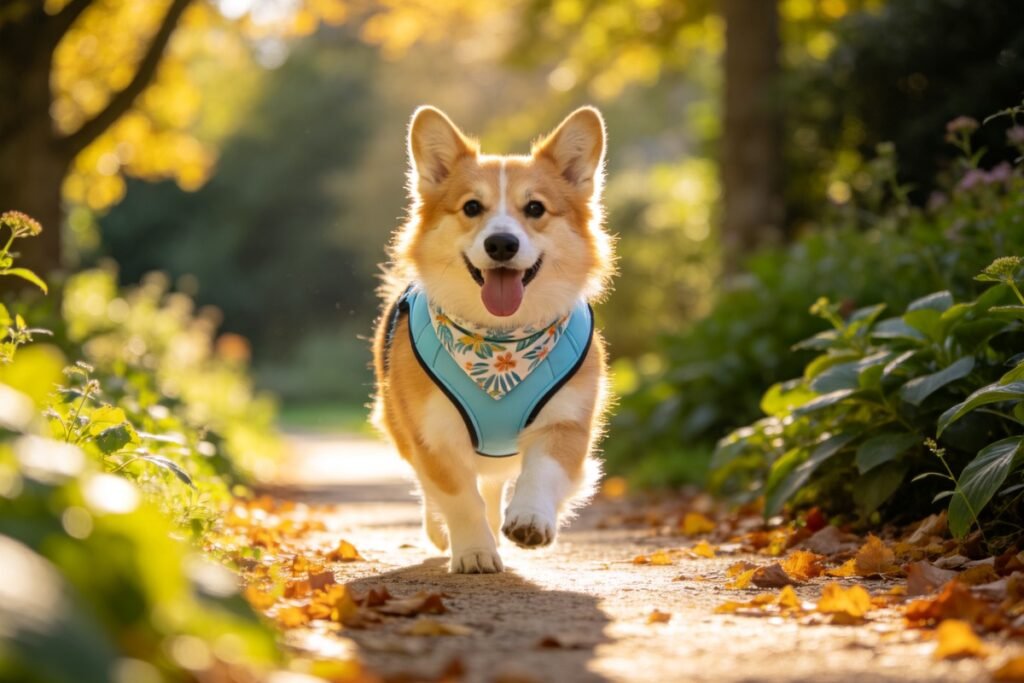
Summer Dog Bandanas \& Cooling Vests (2026)
Last updated: August 6, 2026 · Reading time: ~8 min · Research by HiPetTech editors
A dog cooling vest works by evaporation: you soak it, wring it, and put it on, and as water evaporates it pulls heat away from your dog’s torso. Ruffwear and SGODA lead the category for full vests, while a soaked summer bandana handles the neck for shorter outings. Both are supplements to shade, water, and timing — never substitutes.
Summer gear is the most safety-relevant part of the wardrobe we map in pet outfit ideas for every season, because heatstroke in dogs escalates in minutes. For the wider seasonal shortlist, see HiPetTech best picks.
Transparency note: This page contains Amazon affiliate links. If you buy through them, we may earn a commission at no extra cost to you. We only recommend products we genuinely believe are worth your money. Read our full disclosure →
- Summer Dog Bandanas \& Cooling Vests (2026)
- Quick Verdict: Summer Dog Bandanas \& Cooling Vests (2026)
- How a Dog Cooling Vest Actually Works
- When Evaporative Cooling Fails: The Humidity Problem
- Ruffwear vs SGODA: Cooling Vest Comparison
- Summer Bandanas: The Lighter Option
- Cooling Vest vs Cooling Bandana vs Cooling Mat
- Sizing and Fit for Cooling Gear
- Heat Safety: Pavement, Timing, and Warning Signs
- Who Should Skip a Cooling Vest
- Care and Storage
- FAQ
- Our Pick
Last checked: September 2026. Prices, availability and subscription terms change often — confirm the current price on Amazon before buying.
Quick Verdict: Summer Dog Bandanas \& Cooling Vests (2026)
- Best overall (performance): Ruffwear Cooling Vest — multi-layer technical fabric, shoulder fit for running gait, secure closures, durable for trail use.
- Best value (everyday): SGODA Cooling Vest — simpler construction, broad size range, easy soak-and-wear, affordable enough to own two.
- Best for humid climates/small dogs: Cooling Bandana (PVA/hydro-weave) — covers neck arteries, minimal weight, works moderately well in humidity.
- Best for rest/indoors: Cooling Mat (gel/phase-change) — whole-body cooling, no re-wetting needed, works in high humidity.
Best for: Hot-weather walks, hiking dogs, flat-faced breeds needing extra cooling, owners in dry heat climates, summer travel and car rides. Not ideal for: Very high humidity climates (evaporation stalls), toy breeds under 8 lb (water weight too much), dogs that refuse body garments, or anyone using gear as permission to walk at noon.
(Prices and stock can change; always verify on Amazon.)
How a Dog Cooling Vest Actually Works
Dogs can’t sweat through their skin. They shed heat by panting, through the paw pads, and by vasodilation in the ears and belly. On a hot day panting alone becomes inefficient, especially for flat-faced breeds whose airways restrict airflow.
An evaporative cooling vest borrows the mechanism dogs lack. The fabric holds water in an absorbent inner layer; as that water evaporates through a breathable shell, the phase change draws heat out of the vest — and, by conduction, out of the torso underneath. Better designs place the wet layer against the chest and belly where large blood vessels run close to the surface, so cooled blood circulates back through the body.
The three-step routine is always the same:
- Soak the vest in cold water until saturated.
- Wring it out until it’s damp, not dripping. A dripping vest is heavy, uncomfortable, and no more effective.
- Fit and go. Re-wet every 30–60 minutes in dry heat, more often in sun.
A vest that has dried out is doing nothing except adding an insulating layer, which is worse than no vest at all. That’s the single most common mistake owners make.
When Evaporative Cooling Fails: The Humidity Problem
This is the straight limitation nobody puts on the packaging. Evaporative cooling depends on the surrounding air being able to absorb moisture. In dry heat — Arizona, Nevada, inland California — a soaked vest is genuinely effective and can stay damp and cool for a long stretch. In humid heat — Florida, the Gulf Coast, the Southeast in August — the air is already near saturation, evaporation slows dramatically, and the vest’s cooling power drops sharply while its weight and coverage remain.
Practical rule: The higher the humidity, the less you should rely on an evaporative vest and the more you should rely on timing, shade, and air conditioning. In high humidity, a cooling bandana is often the smarter choice than a full vest, because it covers less surface area and won’t trap heat against the torso when it stops working.
Phase-change and gel-based cooling products behave differently — they cool by absorbing heat into the material rather than by evaporation, so humidity doesn’t affect them. They’re heavier and have a fixed duration, but they’re the better technology for muggy climates.
(Prices and stock can change; always verify on Amazon.)
Ruffwear vs SGODA: Cooling Vest Comparison
Ruffwear is the premium, performance-oriented option. The brand’s background is technical outdoor gear for working and hiking dogs, and its cooling products reflect that: multi-layer construction, thoughtful fit around the shoulders so the vest doesn’t restrict a running gait, secure closures that hold at speed, and durable fabric that survives trail use. If your dog hikes, runs trails, or works outdoors in summer, this is the tier to buy.
SGODA is the value option and the one most owners actually need. Simpler construction, broad size range, easy soak-and-wear operation, and a price point that makes it reasonable to own two so one can be soaking while the other is on the dog. For neighborhood walks, backyard time, and car travel, it does the job.
| Feature | Ruffwear | SGODA |
|---|---|---|
| Positioning | Premium / performance | Value / everyday |
| Best for | Hiking, trail running, working dogs | Walks, yard, travel |
| Construction | Multi-layer technical fabric | Simpler absorbent layer |
| Gait freedom | Designed for running | Adequate for walking |
| Durability | High | Moderate |
| Size range | Broad, small through large | Broad, small through large |
| Buy |
Model lineups and fabric specs change between seasons — check current specs and each brand’s size chart on Amazon before ordering.
Summer Bandanas: The Lighter Option
Not every hot day calls for a vest. A summer bandana covers the neck, where the carotid arteries run close to the surface, and it does so with almost no coverage penalty.
Two types worth knowing:
- Standard cotton bandanas in light colors and weights. These don’t cool actively — they’re style pieces that at least don’t add heat. Light colors reflect more radiant heat than dark ones, which matters more than people assume.
- Cooling bandanas made from PVA, hydro-weave, or similar engineered fabrics. Soak, wring, tie. Same evaporative principle as a vest, applied to a much smaller area.
For hot weather, tie a cooling bandana with a simple overhand knot rather than a necktie fold — once wet, the fabric is heavier and a single secure knot holds better. Our dog bandana styling ideas guide walks through all three tie methods, and both Blueberry Pet and Rogz carry summer-weight prints that hold color through repeated soaking.
Bandanas are also the fallback for dogs who refuse a vest — something on the neck is far more tolerable than a garment wrapped around the chest.
Cooling Vest vs Cooling Bandana vs Cooling Mat
Different tools for different moments.
| Feature | Cooling vest | Cooling bandana | Cooling mat |
|---|---|---|---|
| Coverage | Chest, belly, back | Neck only | Whole body, lying down |
| Use case | Active outdoor time | Short walks, humid days | Rest, crate, car, indoors |
| Cooling mechanism | Evaporative | Evaporative | Gel / phase-change |
| Re-wetting needed | Every 30–60 min | Every 20–40 min | No |
| Works in high humidity | Poorly | Moderately | Yes |
| Dog tolerance | Moderate | High | Highest |
| Buy |
Most hot-climate households end up with a vest for outings, a bandana for quick trips, and a mat for the car and crate. The mat gets used most, and it pairs with a breathable resting setup — see stylish cat beds for the living room for the multi-pet version. Come autumn, the same logic runs in reverse in our dog winter coats for cold weather guide.
Sizing and Fit for Cooling Gear
Fit matters more on a cooling vest than on any other garment, because the mechanism depends on contact.
Measure chest girth behind the front legs, back length from neck base to tail base, and neck girth. Then:
- Snug, not tight. The damp layer must touch the chest and belly. A loose vest leaves an air gap and cools nothing but itself. Two flat fingers under the closure is the right tension.
- Account for water weight. A soaked vest is noticeably heavier than a dry one. On dogs under 10 lb this is a real consideration — go for a bandana instead if the vest weighs down the shoulders.
- Check shoulder clearance. Run the walk test with the vest wet. Any change in gait means the armholes are cut too far back.
- Prioritize belly contact on short-legged breeds. Dachshunds and Corgis get the most benefit from belly coverage because they’re closest to the radiant heat coming off the ground.
- Light colors only. A black cooling vest absorbs radiant heat and fights its own mechanism.
If your dog wears a harness, confirm the vest either has a harness passthrough or fits comfortably underneath. Layering a harness over a wet vest is usually fine; layering it under is not.
Heat Safety: Pavement, Timing, and Warning Signs
No garment replaces good judgement. These are the rules that actually prevent heatstroke.
The Seven-Second Pavement Test
Press the back of your hand to the asphalt for seven seconds. If you can’t hold it, your dog can’t walk on it. Asphalt can run 40–60°F hotter than the air on a sunny day, and paw pad burns are common in July and August.
Walk Early or Late
Before 8am and after sunset. Midday walks in summer are the highest-risk activity in a dog’s normal routine.
Never Leave a Dog in a Parked Car
Interior temperatures climb dangerously within minutes even with windows cracked.
Carry Water and Offer It Often
A collapsible bowl in the bag costs nothing and changes outcomes.
Know the Escalation
- Early: Heavy panting, bright red gums, thick drool, seeking shade, slowing down
- Serious: Wobbling, disorientation, vomiting, diarrhea, glazed eyes
- Emergency: Collapse, seizure, unresponsiveness
At the first serious sign, stop, move to shade, offer small amounts of cool (not ice-cold) water, wet the belly and paw pads, and call a vet. Heatstroke is a medical emergency, not something to manage at home.
Highest-risk dogs: Brachycephalic breeds (Pugs, Bulldogs, Frenchies, Boxers), overweight dogs, seniors, puppies, black-coated dogs, and any dog with heart or airway conditions. These dogs need cooling gear the most and tolerate heat the least.
Who Should Skip a Cooling Vest
- Dogs in very high humidity where evaporation stalls. Use a gel mat, air conditioning, and timing instead — a non-evaporating vest is just an extra layer.
- Toy breeds under 8 lb, where the water weight is disproportionate. A cooling bandana delivers most of the benefit at a fraction of the load.
- Dogs who won’t tolerate body garments. Forcing a vest onto a stressed dog raises their temperature, which defeats the entire purpose.
- Anyone using it as permission to walk at noon. This is the dangerous failure mode. A vest buys you comfort margin, not immunity.
What to look for instead: Almost no listing states how long the vest stays effective at a given temperature and humidity, so buyers have no way to plan re-wetting intervals. Very few publish fabric weight either, which matters enormously for small dogs. It would help if more reflective trim on cooling gear — summer walks happen at dawn and dusk, and visibility is as much a safety issue in July as in January. Until specs improve, buy from listings with real customer photos and treat “hours of cooling” claims as marketing.
Care and Storage
- Rinse with plain water after every use, especially after beach or lake trips — salt and chlorine degrade absorbent fabrics.
- Machine wash cold on gentle a few times per season; skip fabric softener, which coats fibers and destroys absorbency.
- Air dry completely before storing. A damp vest in a bag grows mildew within days, and mildew smell never fully leaves engineered cooling fabric.
- Store flat or loosely rolled, out of direct sunlight — UV degrades the shell over time.
- Replace it when the fabric stops holding water. Absorbency is consumable.
FAQ
Does a dog cooling vest actually work?
Yes, in dry heat. An evaporative vest soaked and wrung out draws heat from your dog’s torso as the water evaporates, and it can measurably improve comfort on hot walks. Effectiveness drops sharply in high humidity because the air can’t absorb more moisture. Re-wet every 30–60 minutes — a dried-out vest insulates instead of cooling.
How often should I re-wet a cooling vest?
Every 30–60 minutes in dry heat, and more often in direct sun or during activity. Check by touch: if the fabric feels cool and damp, it’s working; if it feels dry or warm, re-soak immediately. Carry a water bottle on longer outings specifically for re-wetting.
Cooling vest or cooling bandana — which is better?
A vest covers chest and belly and cools more effectively in dry heat, making it better for hikes and longer outings. A bandana covers only the neck, weighs far less, and is the better choice for small dogs, humid climates, short walks, and dogs who dislike body garments. Many owners keep both.
Are cooling vests safe for flat-faced breeds?
They’re helpful, but a vest is not enough on its own. Pugs, Bulldogs, and Frenchies have restricted airways and poor heat tolerance, so cooling gear must be combined with early-morning or evening walks, constant shade, water, and air conditioning. Never rely on a vest to make a midday summer walk safe for a brachycephalic dog.
What temperature is too hot to walk a dog?
Above roughly 85°F, limit walks sharply; above 90°F, avoid them entirely except for brief bathroom breaks in shade. Humidity lowers those thresholds. Always run the seven-second pavement test first — asphalt can be 40–60°F hotter than the air and will burn paw pads regardless of what your dog is wearing.
Our Pick
Ruffwear is our overall winner for a dog cooling vest. The construction quality, the shoulder fit that doesn’t interfere with a running gait, and the closures that stay put during activity make it the only tier worth trusting on a summer hike. If your dog is genuinely active in heat, this is where the extra cost shows up as function rather than branding.
Choose SGODA instead for everyday neighborhood use. It delivers the same evaporative mechanism at a price that makes owning two practical, so one soaks while the other is worn — which, in practice, is the difference between a vest that works all afternoon and one that dries out and gets abandoned.
Choose a cooling bandana instead if you live somewhere humid, your dog is under 8 lb, or your dog rejects body garments. And whatever you buy, remember the hierarchy: shade, water, and timing first; gear second. For the rest of the warm-weather wardrobe, see our roundups of best-selling dog clothes on Amazon in 2026 and popular cat apparel and harnesses.
(Prices and stock can change; always verify on Amazon.)
Want our seasonal pet shortlists? Subscribe via HiPetTech’s about page for warm-weather roundups and straight verdicts.
Disclosure \& Transparency
This post contains affiliate links to Amazon and other retailers. As an Amazon Associate, we earn from qualifying purchases at no extra cost to you. This site is research-based: recommendations are built from brand specifications, large-scale user reviews, long-term feedback in pet communities, and reliability signals such as firmware updates and parts availability. We do not claim personal in-house testing of every unit. Prices and stock levels can change at any time; always verify on the retailer’s page before purchasing. Read our full editorial and affiliate policy →
这是第 18 篇的完整优化稿。