
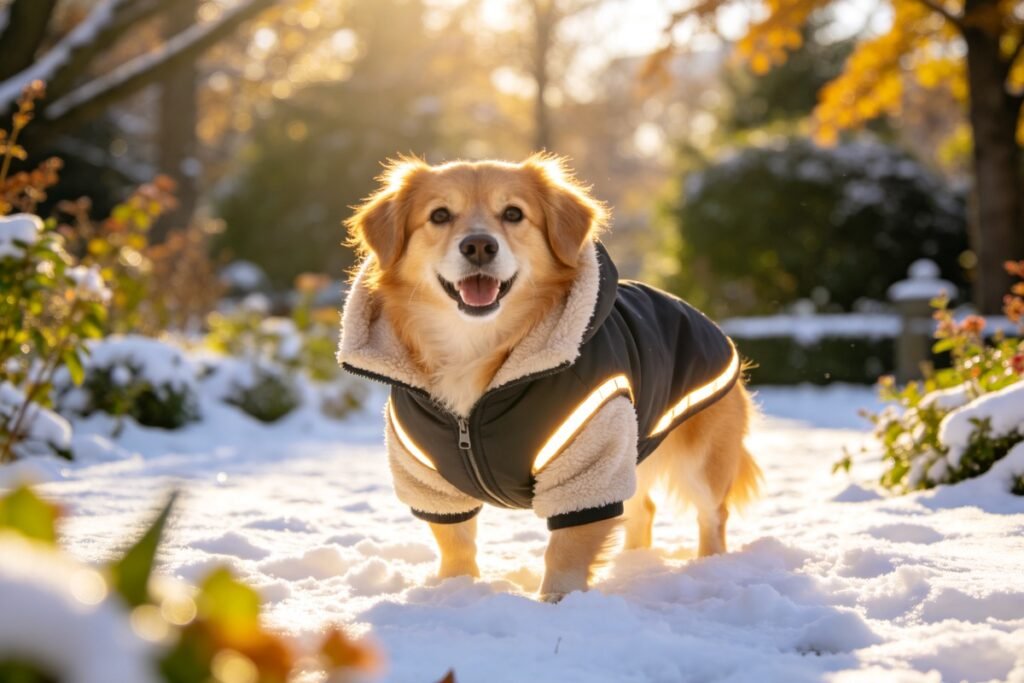
Best Dog Winter Coats for Cold Weather (2026)
Last updated: August 6, 2026 · Reading time: ~8 min · Research by HiPetTech editors
The best dog winter coats for genuinely cold weather combine three layers of function: a waterproof or water-resistant outer shell, a fleece or quilted lining for insulation, and reflective trim for dark walks. Canada Pooch leads the category for real sub-freezing conditions, with size ranges that cover both toy breeds and giants. A sweater is not a coat — once wind and wet enter the picture, you need a shell.
Coats are the highest-stakes purchase in the pet wardrobe we map in pet outfit ideas for every season, because getting this one wrong means a cold, miserable dog. For the wider seasonal shortlist, see HiPetTech best picks.
Transparency note: This page contains Amazon affiliate links. If you buy through them, we may earn a commission at no extra cost to you. We only recommend products we genuinely believe are worth your money. Read our full disclosure →
- Best Dog Winter Coats for Cold Weather (2026)
- Quick Verdict: Best Dog Winter Coats for Cold Weather (2026)
- When Your Dog Actually Needs a Winter Coat
- The Four Features That Separate Coats from Sweaters
- Canada Pooch and the Brands Worth Knowing
- Winter Coat Comparison Table
- Sizing a Winter Coat for Small and Large Dogs
- Layering: Sweater Under Shell
- Paws, Salt, and the Rest of Winter Safety
- Who Should Skip a Winter Coat
- Washing and Reproofing a Winter Coat
- FAQ
- Our Pick
Last checked: September 2026. Prices, availability and subscription terms change often — confirm the current price on Amazon before buying.
Quick Verdict: Best Dog Winter Coats for Cold Weather (2026)
- Best overall (sub-freezing): Canada Pooch — water-resistant shells, substantial fleece/quilted linings, high collars, belly coverage, reflective detailing, size range from toy to large.
- Best for active/hiking dogs: Kurgo — harness integration, reflective panels, adjustable fit, technical gear for trail use.
- Best for toy/small breeds: Gooby — XXS–L sizing, small-breed patterning, reliable fallback for dogs under 15 lb.
- Best for mild winters/style: Blueberry Pet — lighter, style-forward, coordinates with collar/leash/bandana, not for Minnesota January.
Best for: Thin single-coated breeds (Greyhounds, Whippets, Vizslas), toy/small breeds (Chihuahuas, Yorkies), short-legged dogs (Dachshunds, Corgis), seniors/puppies, dogs in cold climates, winter walks in snow/sleet/rain. Not ideal for: Heavy double-coated working breeds (Huskies, Malamutes, Samoyeds), dogs that only go out for 2-minute bathroom breaks in mild climates, or anyone buying purely on looks.
(Prices and stock can change; always verify on Amazon.)
When Your Dog Actually Needs a Winter Coat
Not every dog needs one, and the straight answer depends on coat type, size, age, and how long you’re outside.
Strong candidates for a coat:
- Thin single-coated breeds: Greyhounds, Whippets, Vizslas, Weimaraners, Boxers, Dobermans, Pit-type dogs
- Toy and small breeds: Chihuahuas, Yorkies, Miniature Pinschers, Italian Greyhounds
- Short-legged dogs whose bellies contact snow: Dachshunds, Corgis, Basset Hounds
- Seniors, puppies, and dogs with heart or endocrine conditions
- Any dog recently clipped or shaved
Rough temperature guide for a healthy adult dog with a normal coat:
| Temperature | Small / thin-coated | Medium coat | Heavy double coat |
|---|---|---|---|
| 45–60°F | Optional layer | None | None |
| 32–45°F | Coat recommended | Optional | None |
| 20–32°F | Coat required | Coat recommended | Usually none |
| Under 20°F | Coat + limited time | Coat required | Monitor closely |
Wind and wet shift every row downward. A 35°F day with sleet and 20 mph wind is functionally colder than a still 25°F day, and it’s the scenario where a waterproof shell earns its cost — the exact mirror image of the humidity problem we cover in summer dog bandanas and cooling vests. Watch for shivering, lifted paws, a hunched posture, or reluctance to keep walking — those are your real thresholds regardless of what a chart says.
The Four Features That Separate Coats from Sweaters
This is where a coat justifies the price gap over a knit.
1. A Waterproof or Water-Resistant Shell
Look for a rated outer fabric with a DWR (durable water repellent) finish, taped or bonded seams, and a tight weave. “Water-resistant” handles snow and light drizzle; “waterproof” handles sustained rain and slush. Wet fur loses insulating ability almost completely, so the shell is doing more thermal work than the lining in most real conditions.
2. Genuine Insulation
Fleece lining is the most common and the most practical: warm, quick-drying, and machine washable. Quilted synthetic fill is warmer per ounce and better below 20°F, but takes longer to dry. Sherpa lining sits between the two and feels warmest to the touch. Whatever the fill, the lining should extend down the sides, not just across the spine — a coat that only covers the back leaves the ribcage exposed.
3. Belly Coverage
The belly is where small and short-legged dogs lose the most heat, and it’s the part in contact with snow. Full or partial belly panels make a bigger difference than any other single feature. Male dogs need a cutaway front panel so the coat stays dry.
4. Reflective Trim
Winter means walking in the dark on both ends of the day. Reflective piping along the sides and back is standard on good coats and absent on cheap ones. It costs the manufacturer almost nothing and it’s the feature hard to give up.
Also check: A harness slot or D-ring passthrough, adjustable hook-and-loop or buckle closures rather than a fixed pullover shape, a high collar or removable hood, and a machine-washable label.
(Prices and stock can change; always verify on Amazon.)
Canada Pooch and the Brands Worth Knowing
Canada Pooch is the default recommendation for genuinely cold climates, and the reason is design intent. The brand builds around real winter rather than decorative warmth: heavier fills, water-resistant shells, high collars, and sizing that assumes a coat will be worn over a base layer. Their range spans small breeds through large, and the cold-weather models tend to include reflective detailing as standard. If you get months of sub-freezing weather, start here.
(Prices and stock can change; always verify on Amazon.)
Kurgo is the pick for active and outdoorsy dogs. Their gear leans technical — harness compatibility, reflective panels, adjustable fit — and it holds up to trail use. Best for medium and large dogs who hike in winter rather than stroll around the block.
Gooby extends into coat territory at the small end of the market. If your dog is under about 15 lb and other brands’ XS still swims on them, Gooby’s small-breed patterning is the reliable fallback — the same strength we highlight in our guide to cute dog sweaters for small dogs.
Blueberry Pet sits at the lighter, more style-forward end. Good for transitional autumn and mild-winter regions, and unbeatable if you want the coat to coordinate with a collar, leash, and bandana. Not the choice for a Minnesota January.
Winter Coat Comparison Table
| Feature | Canada Pooch | Kurgo | Gooby | Blueberry Pet |
|---|---|---|---|---|
| Best for | Sub-freezing climates | Active / hiking dogs | Toy + small breeds | Mild winters, style |
| Waterproofing | Water-resistant to waterproof | Water-resistant | Varies by model | Light / minimal |
| Lining | Fleece, sherpa, quilted | Fleece | Fleece | Fleece or unlined |
| Reflective trim | Common | Standard | Some models | Some models |
| Size range | XS–XL | S–XL | XXS–L | XS–XL |
| Harness access | Common | Standard | Varies | Varies |
| Buy |
Model lineups change every season — check current specs and each brand’s own size chart on Amazon before ordering.
Sizing a Winter Coat for Small and Large Dogs
Measure three things with a soft tape: chest girth at the widest point behind the front legs, back length from the base of the neck to the base of the tail, and neck girth where the collar sits.
For Small Dogs (Under ~20 lb)
Chest girth is the deciding number. Deep-chested toys like Italian Greyhounds and Min Pins need a narrow, long cut; barrel-chested Pugs and Frenchies need the opposite. Belly coverage matters more at this size than at any other, because the dog is physically closer to the snow. Don’t buy a coat whose back length extends past the tail base — it will bunch when the dog sits.
For Large Dogs (60 lb+)
Back length becomes the constraint, and chest depth is where most coats fail. Look for adjustable side straps or a gusseted panel rather than a fixed circumference. Deep-chested giants like Great Danes and Greyhounds are the hardest to fit; check that the listed chest range genuinely reaches 34–40 inches rather than stopping at “XL.”
Universal Rules
- Leave room for a base layer if you plan to layer. Size up if the coat will go over a sweater.
- The front opening should sit ahead of the shoulder blades so it doesn’t restrict the stride.
- Test the sit. Many coats fit standing and dig in when the dog sits down.
- Between sizes? Size up for double coats and layering, down for sleek short-coated dogs.
Layering: Sweater Under Shell
Below roughly 20°F, a single garment usually isn’t enough for a small or thin-coated dog. The layering system that works is the same one people use.
- Base layer: A lightweight fleece or thin acrylic sweater against the coat.
- Shell: A water-resistant, insulated coat sized one step up to accommodate the base.
The advantage over one heavy coat is adaptability — you drop the base layer on milder days instead of owning two coats. The catch is bulk at the shoulders, so run the walk test with both layers on. For picking the base, our cute dog sweaters for small dogs guide covers materials and fit; matching owner and dog outfit ideas shows how the layers coordinate; and if you’re layering over a costume in late October, check the comfort rules in best dog Halloween costumes 2026.
Paws, Salt, and the Rest of Winter Safety
A coat solves the torso. Winter attacks from below too.
- Road salt and de-icer irritate paw pads and are toxic if licked off. Rinse or wipe paws after every walk.
- Ice balls form between the toes on furry-footed breeds. Trim the hair between pads in winter.
- Boots work if introduced patiently — one boot indoors for a few minutes, then build up. Most failed boot attempts are rushed introductions, not bad boots.
- Paw balm is the lower-friction alternative for dogs who refuse boots.
- Shorten walks, increase frequency. Three ten-minute outings beat one thirty-minute outing at 15°F.
- Dry the dog fully before settling. A damp dog on a cold floor stays cold for hours — this is where a warm indoor resting spot matters, and one of the best orthopedic dog beds with a raised, insulated base keeps a senior dog off the cold floor entirely.
Who Should Skip a Winter Coat
- Heavy double-coated working breeds — Huskies, Malamutes, Samoyeds, Great Pyrenees, Bernese. A coat compresses the undercoat loft that keeps them warm and can cause overheating on active walks. These dogs are built for this weather.
- Dogs who only go outside for two-minute bathroom breaks in a mild climate. The coat will live on a hook.
- Dogs with dense coats who pant heavily on winter walks. That’s a sign you’re over-insulating.
- Anyone buying purely on looks. A decorative quilted jacket with no shell and no belly panel is a sweater with extra steps.
What to look for instead: Waterproof ratings are almost never published. Human outerwear lists a hydrostatic head figure; dog coats say “waterproof” and leave it there. It would help if more brands to offer chest-girth adjustability on large sizes instead of expecting deep-chested breeds to fit a fixed circumference. Until then, buy from listings with customer photos on dogs of similar build, and prioritize adjustable straps.
Washing and Reproofing a Winter Coat
- Close all hook-and-loop fasteners before washing — open Velcro shreds fleece lining.
- Wash cold on gentle, using a technical-fabric detergent rather than standard detergent, which leaves residue that kills water repellency.
- Never use fabric softener on a shell fabric.
- Tumble dry low if the label allows. Gentle heat reactivates a DWR finish.
- Reproof with a spray-on DWR treatment once per season, or when water stops beading on the shell.
- Store dry and unfolded at the end of winter; long-term creasing damages coated fabrics.
FAQ
Do dogs really need winter coats?
Thin-coated, small, short-legged, senior, and recently clipped dogs genuinely do below about 45°F, and nearly all of them do below 32°F. Heavy double-coated breeds like Huskies and Malamutes do not — a coat compresses their insulating undercoat. Watch for shivering, lifted paws, and reluctance to walk as your practical signal.
What’s the difference between a dog sweater and a dog winter coat?
A sweater is a single insulating knit layer with no weather protection. A winter coat adds a water-resistant or waterproof outer shell, an insulated lining, belly coverage, and usually reflective trim. Wet fur loses almost all insulating value, so in snow, sleet, or rain a coat is not optional for a thin-coated dog.
Should a dog winter coat be waterproof or just water-resistant?
Water-resistant is enough for dry snow and light drizzle. Choose fully waterproof with taped seams if you deal with sustained rain, wet slush, or long outdoor sessions. The trade-off is breathability — fully waterproof shells trap more moisture from panting, so they’re overkill for short neighborhood walks.
How do I size a winter coat for a large dog?
Measure back length from neck base to tail base first, then chest girth at the widest point. Confirm the listed chest range actually reaches your dog’s measurement rather than trusting the “XL” label. Deep-chested breeds need adjustable side straps or gussets. Always test the fit with the dog sitting, not just standing.
Can my dog wear a sweater under a winter coat?
Yes, and below roughly 20°F it’s the most effective approach. Use a thin fleece or acrylic sweater as a base and size the coat one step up to fit over it. Check that your dog still walks normally with both layers on — bulk tends to build at the shoulders.
Our Pick
Canada Pooch is our overall winner for dog winter coats. The brand designs for real winter rather than decorative warmth: water-resistant shells, substantial fleece and quilted linings, high collars, belly coverage, and reflective detailing on cold-weather models. The size range covers toy breeds through large dogs, and the fit assumes a base layer underneath — exactly what you need below 20°F.
Choose Kurgo instead if your dog hikes, runs, or works outdoors in winter. Harness integration and reflective panels matter more than plush lining once the dog is generating their own heat.
Choose Gooby instead if your dog is under 15 lb and every other brand’s XS is still too big. Choose Blueberry Pet instead for mild winters where the coat is really a style piece — and pair it with picks from our trending pet accessories roundup.
(Prices and stock can change; always verify on Amazon.)
Want our seasonal pet shortlists? Subscribe via HiPetTech’s about page for cold-weather roundups and straight verdicts.
Disclosure \& Transparency
This post contains affiliate links to Amazon and other retailers. As an Amazon Associate, we earn from qualifying purchases at no extra cost to you. This site is research-based: recommendations are built from brand specifications, large-scale user reviews, long-term feedback in pet communities, and reliability signals such as firmware updates and parts availability. We do not claim personal in-house testing of every unit. Prices and stock levels can change at any time; always verify on the retailer’s page before purchasing. Read our full editorial and affiliate policy →
这是第 19 篇的完整优化稿。