Popular Cat Apparel \& Harnesses (2026)
Last updated: August 4, 2026 · Reading time: ~7 min · Research by HiPetTech editors
Most cats reject sweaters, so the genuinely popular cat harness options in 2026 are practical walking gear — not cute outfits. The best-selling harnesses from Rabbitgoo, Voyager, and Puppia let indoor cats safely explore outside on a leash, while lightweight walking jackets add weather protection for bold explorers. If you want one useful purchase, a well-fitted escape-proof harness beats any sweater your cat will immediately hate.
Start with the big picture in our style hub: pet outfit ideas for every season shows where cat harnesses fit alongside the rest of the wardrobe. For a wider shortlist across the fashion silo, see HiPetTech best picks.
Transparency note: This page contains Amazon affiliate links. If you buy through them, we may earn a commission at no extra cost to you. We only recommend products we genuinely believe are worth your money. Read our full disclosure →
- Popular Cat Apparel \& Harnesses (2026)
- Quick Verdict: Popular Cat Apparel \& Harnesses (2026)
- Why a Cat Harness Beats Cat Sweaters
- The straight Truth: Cats Reject Sweaters
- Best-Selling Cat Harness Brands in 2026
- Walking Jackets: The Practical Middle Ground
- Measuring Your Cat for the Right Fit
- Cat Harness Comparison
- Our straight Take: Who Should Skip a Harness
- How to Introduce a Cat Harness Without a Fight
- FAQ
- Our Pick
- Final Word
Last checked: September 2026. Prices, availability and subscription terms change often — confirm the current price on Amazon before buying.
Quick Verdict: Popular Cat Apparel \& Harnesses (2026)
- Best all-around: Rabbitgoo vest-style cat harness — escape-proof wrap, breathable mesh, dual adjusters suit most cats.
- Best for calm cats: Voyager step-in harness — easiest to dress, soft padded mesh, many colors.
- Best for frequent walkers: Puppia soft air-mesh harness — premium comfort for sensitive skin, specific sizing.
- Practical middle ground: Walking jackets — add light warmth and visibility for cool-evening walks (only after harness is routine).
Best for: Indoor cats needing safe outdoor enrichment, bold explorers, owners who want practical gear over novelty clothing. Not ideal for: Elderly or chronically anxious cats, households beside busy roads with no quiet green space, cats that have never shown interest in windows/doors.
(Prices and stock can change; always verify on Amazon.)
Why a Cat Harness Beats Cat Sweaters
A cat harness is the rare piece of cat apparel that solves a real problem instead of creating one. Indoor cats need enrichment, and a controlled outdoor walk delivers smells, sights, and exercise that no toy replicates. A harness distributes pressure across the chest and shoulders so you can guide — not choke — your cat, and a good escape-proof design prevents the classic “Houdini” disappear into the bushes.
By contrast, a sweater is a solution in search of a problem for most cats. They already wear a fur coat, they overheat easily, and the sensation of fabric on their torso reads as a threat to many felines. That is why “cat sweater” listings are dominated by photo props while “cat harness” listings are dominated by repeat buyers who walked their cat every week for a year.
The smart move is to invest in one quality harness and skip the novelty clothing entirely. Your cat stays calmer, you get genuine outdoor time together, and the gear actually earns its drawer space.
If you are also dressing a dog in the household, our sibling guide to the best selling dog clothes on Amazon covers sweaters and costumes that dogs actually tolerate far better than cats do.
The straight Truth: Cats Reject Sweaters
We say this plainly because too many gift guides pretend otherwise: most cats hate sweaters. The reasons are behavioral, not picky.
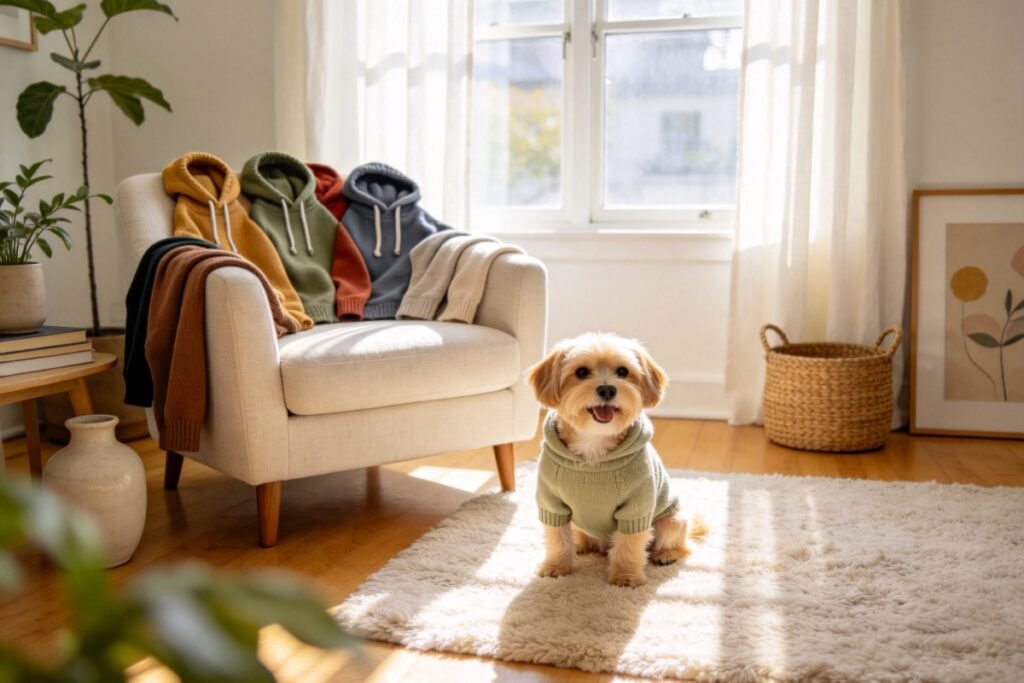
Cats thermoregulate through a dense coat and rely on unrestricted movement to feel safe. A sweater traps heat and limits the stretch-and-twist reflexes they use to escape perceived danger. Many cats freeze, flop, or frantically chew at the fabric. The少数 who tolerate a sweater are usually hairless breeds (Sphynx) or cats acclimated as kittens — and even then it is a niche use case.
Practical takeaway: do not buy a cat sweater expecting daily wear. If you want a photo, a bandana or a harness with a decorative pattern achieves the look without the meltdown. For dog bandana styling that transfers the same logic, see dog bandana styling ideas.
The escape-proof harness is the straight hero of cat apparel, and it is where the 4★+ review counts tell the real story.
Best-Selling Cat Harness Brands in 2026
Three names dominate the best-seller lists for good reasons.
Rabbitgoo Cat Harness
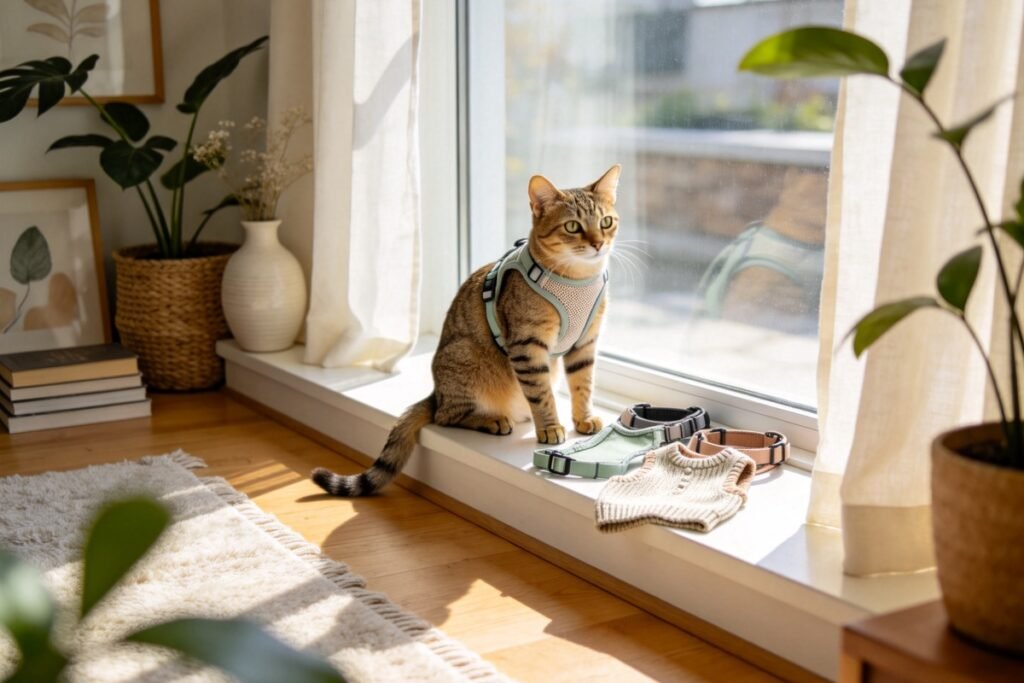
The Rabbitgoo vest-style harness is the entry-point favorite: adjustable neck and chest straps, a breathable mesh body, and a secure back clip. It is lightweight, which suits cats that object to bulk. The vest shape spreads pressure better than a thin strap H-style harness for escape artists.
(Prices and stock can change; always verify on Amazon.)
Voyager Step-In Harness
Voyager’s step-in design is loved by owners of calmer cats because it is easy to put on — the cat steps in, you pull it up and clip. It uses a soft, padded mesh and comes in many colors. The trade-off is that a determined escaper can sometimes back out, so a proper snug fit matters more than with the vest style.
Puppia Soft Harness
Puppia is the premium pick, with a padded, bouncy-soft air-mesh construction that many cats tolerate best of all. It is the choice for cats with sensitive skin or owners who walk frequently. The fit runs specific, so measure carefully and check the brand chart.
Each of these appears repeatedly in 4★+ listings with thousands of reviews — a stronger signal than any single staged photo.
Walking Jackets: The Practical Middle Ground
Once a cat accepts a harness, some owners graduate to a walking jacket: a harness with a light fabric shell that adds a little warmth and visibility for cool-evening or light-rain walks. This is the closest cats come to “apparel” they actually benefit from.
Walking jackets work best for:
- Bold, confident cats already comfortable on a leash.
- Cool-climate evening walks where a bare mesh harness gets chilly.
- Reflective trims that improve visibility near dusk.
They are not for nervous first-timers — add the jacket only after the harness is old news. Think of the jacket as a layer, not a starter.
For warm-weather dog walking gear that follows the same “practical layer” logic, our summer dog bandanas and cooling vests guide is the canine counterpart.
Measuring Your Cat for the Right Fit
A harness is only escape-proof if it fits, and cats are measured differently than dogs. Grab a soft tape and follow three numbers.
Neck circumference just below the head — this sets the minimum closure on vest and step-in styles. Chest girth at the widest point behind the front legs — this is the load-bearing measurement and the one brands size by. Back length from neck base to tail base helps confirm the vest won’t ride up.
Apply the two-finger rule: you should fit two fingers flat between strap and skin. Too tight and the cat freezes or chafes; too loose and it backs out — the single most common failure mode we see in 1-star reviews. Puppia runs specific rather than forgiving, so if your cat sits between sizes, the brand chart usually says size down for air-mesh; Rabbitgoo and Voyager forgive more with dual adjusters.
For weight context, most domestic cats fall between 8 and 12 lb, which maps to the small/medium bands of these brands — but always trust the girth number over the label. Kittens need the smallest setting and a re-check every few weeks. A correctly measured harness is the difference between a confident explorer and a failed first walk.
Cat owners who also share their home with a dog will find the clothing side covered in our best selling dog clothes on Amazon guide, and the smaller photo-ready extras in our trending pet accessories roundup — from bow ties to personalized collars.
Cat Harness Comparison
| Feature | Rabbitgoo | Voyager | Puppia |
|---|---|---|---|
| Style | Vest (mesh) | Step-in (mesh) | Soft air-mesh |
| Adjustability | Neck + chest | Step-in fit | Specific sizing |
| Best for | Escape-prone cats | Calm, easy dressing | Sensitive-skin frequent walkers |
| Price tier | Budget | Budget–mid | Mid–premium |
| Escape-proof rating | High | Medium | High |
No single harness fits every cat. Match the style to your cat’s temperament: anxious and wiggly → vest; calm and cooperative → step-in; frequent walker with delicate skin → Puppia.
Our straight Take: Who Should Skip a Harness
A cat harness is not for every household, and we will say so. If your cat is elderly, chronically anxious, or has never shown interest in windows and doors, forcing outdoor walks may do more harm than good — enrichment through puzzle feeders and cat trees is kinder. Likewise, if you live beside a busy road with no quiet green space, the risk of a spook outweighs the benefit.
What to look for instead: too many listings show a cat wearing a harness indoors looking miserable, then claim “easy walk.” Trust the 1–3 star reviews that describe real escape attempts. And size down rather than up — a loose harness is the #1 escape cause.
A few safety notes we repeat to every first-time cat walker: keep sessions short (ten to fifteen minutes) while your cat learns the sights and sounds; avoid midday heat and freezing wind; check fur and paws for ticks, burrs, and salt after every outing; and never tie the leash to a fixed object — a sudden spook can injure a cat that cannot retreat. Carry treats and end each walk on a calm note so the next one starts positively. These small habits matter more than the brand you buy.
When your cat is home and lounging, comfort matters more than gear. Our stylish cat beds for living room guide covers aesthetic, cozy spots your cat will actually use.
How to Introduce a Cat Harness Without a Fight
Patience beats force. Follow this sequence:
- Leave the harness near the feeding area for a day so it smells like home.
- Drape it (unclipped) over the back during a meal — no fastening yet.
- Clip it on for 2–3 minutes indoors, then remove and treat.
- Attach the leash and let the cat drag it (supervised) for short sessions.
- Walk indoors first, then graduate to a quiet outdoor spot.
Most cats accept the harness within one to two weeks using this slow ladder. Rushing step 2 is the usual reason owners report “my cat flopped and refused.”
If you are coordinating outfits for a dog sibling too, the matching owner dog outfit ideas article shows how a household can dress cohesively without stressing the cat.
FAQ
Do cats actually like wearing a harness?
Many cats tolerate a well-fitted harness once introduced slowly, especially if started young. They rarely “like” it the way dogs do, but a gradual training ladder makes it neutral rather than scary. Most cats reject sweaters far more strongly than a lightweight harness.
Which cat harness is best to stop escaping?
Vest-style escape-proof harnesses like Rabbitgoo and the padded Puppia air-mesh score highest for preventing escapes because they wrap the chest and distribute pressure. The key is a snug fit — a loose harness is the main reason cats back out. Measure carefully against the brand chart.
Is a cat sweater ever a good idea?
Only for hairless breeds like Sphynx or cats acclimated as kittens, and usually for warmth rather than style. Most cats overheat and panic in sweaters. A decorative harness or bandana achieves a cute look with far less stress.
How long does it take to leash-train a cat?
Using a slow introduction — scent, drape, brief wear, leash drag, indoor walk, then outdoor — most cats accept a harness in one to two weeks. Rushing the early steps causes refusal. Short, positive sessions beat long forced ones.
Are walking jackets safe for cats?
Yes, for confident cats already comfortable in a harness. A walking jacket adds light warmth and visibility for cool or dusky walks but should be introduced only after the harness is routine. Avoid them for nervous first-timers.
Our Pick
We pick the Rabbitgoo vest-style cat harness as the best all-around popular choice: its escape-proof wrap, breathable mesh, and dual adjusters suit the widest range of cats, from nervous rescues to bold explorers. For frequent walkers with sensitive skin, upgrade to Puppia; for a calm cat that hates fuss, Voyager’s step-in is the easiest to dress. Skip sweaters — put the budget into a harness and a safe walking routine.
(Prices and stock can change; always verify on Amazon.)
Final Word
Popular cat apparel in 2026 is practical, not precious. A quality cat harness from Rabbitgoo, Voyager, or Puppia delivers real enrichment, while sweaters mostly collect dust. Train slowly, fit snugly, and let your cat set the pace.
Want our cat and dog gear shortlists each season? Join via HiPetTech’s about page for new roundups.
Disclosure \& Transparency
This post contains affiliate links to Amazon and other retailers. As an Amazon Associate, we earn from qualifying purchases at no extra cost to you. This site is research-based: recommendations are built from brand specifications, large-scale user reviews, long-term feedback in pet communities, and reliability signals such as firmware updates and parts availability. We do not claim personal in-house testing of every unit. Prices and stock levels can change at any time; always verify on the retailer’s page before purchasing. Read our full editorial and affiliate policy →