Best Automatic Litter Boxes for Multiple Cats (2026)
Find the right automatic litter box setup for your cats
Research-based picks for odor control, multi-cat access, and less daily scooping in a multi-cat home.
Or compare the 5 top picks · Research-based picks · Amazon affiliate disclosure below
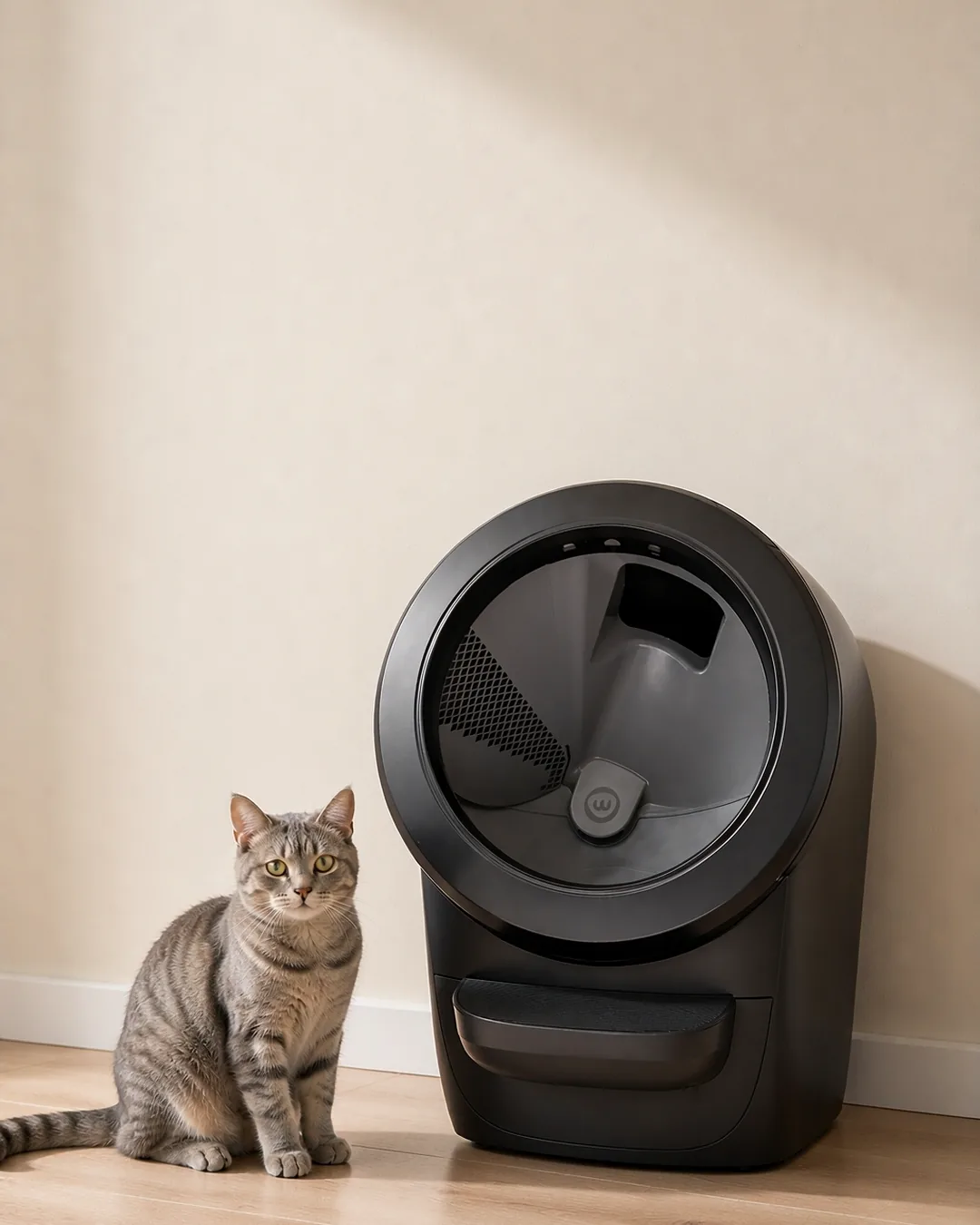
Last updated: July 31, 2026 · Reading time: ~10 min · Research by HiPetTech editors
For most multi-cat homes, the best automatic litter box isn’t a single gadget — it’s a system: enough boxes, in the right places, with odor and safety under control. Automatic boxes don’t change the “one box per cat, plus one” math — they change the labor.
Transparency note: This page contains Amazon affiliate links. If you buy through them, we may earn a commission at no extra cost to you. We only recommend products we genuinely believe are worth your money in a multi-cat home. Read our full disclosure →
Last checked: September 2026. Prices, availability and subscription terms change often — confirm the current price on Amazon before buying.
Compare 5 Automatic Litter Boxes for Multi-Cat Setups
| Model | Role in a multi-cat setup | Strongest reason to compare | Main trade-off | Best for |
|---|---|---|---|---|
| Litter-Robot 4 | Premium primary box | Connected ecosystem with published safety and odor features | Premium price and large footprint | A busy main litter area |
| PETKIT PuraMax 2 | Value-oriented second box | Larger-capacity format at a lower tier | Entry height and consumables to confirm | Multi-room coverage |
| PETKIT Purobot Max Pro 2 | Monitoring-led option | Camera and app-based usage visibility | Higher cost; privacy/subscription review needed | Usage-observation households |
| Neakasa M1 | Open-top option | Open design with litter-containment potential | High entry for less-agile cats | Agile cats and tracking concerns |
| PetSafe SmartSpin | Open-style complement | A less enclosed option to compare | Litter system and recurring costs to verify | Cats reluctant to use enclosed designs |
No automatic litter box replaces the need for enough separate, accessible litter locations in a multi-cat home.
Product specifications may change — confirm current details before purchase.
Table of Contents
- Top Picks at a Glance
- Multi-Cat Litter Box Rules 101
- Start With the Setup That Matches Your Home
- 1. Litter-Robot 4 — Best Premium Primary Box
- 2. PETKIT PuraMax 2 — Best Value Second Box
- 3. PETKIT Purobot Max Pro 2 — Best With Monitoring
- 4. Neakasa M1 — Best for Tracking Control
- 5. PetSafe ScoopFree SmartSpin — Best Open Option
- Odor Control Strategy for Multiple Cats
- Introducing Multiple Cats to Automatic Boxes
- Budgeting for a Multi-Cat Fleet
- FAQ
- Our Pick
Multi-Cat Litter Box Rules 101
Veterinarians and behaviorists repeat the same guidance: in a multi-cat home, aim for one litter box per cat, plus one extra. So two cats → three boxes, three cats → four boxes. Automatic boxes don’t change that social math — they change the workload.
An LR4 might handle the waste volume of two cats between empties, but if both cats prefer one globe, the subordinate cat can get blocked from using it. That’s how accidents outside the box start.
Practical fix: spread boxes across different rooms so no single cat can guard them all. Automatic boxes make this manageable because you’re not scooping four boxes daily — you’re occasionally swapping liners and checking apps. The key is buying enough units and placing them where every cat feels safe, not just cramming one fancy box in a corner and hoping for the best.
With one cat, a manual box is a minor chore. With three or four cats, a single manual box becomes a smell and hygiene problem within hours, and scooping multiple boxes daily is a real burden that many owners quietly fail at.
Automatic boxes remove waste within minutes of each use, which:
- Keeps odor down
- Gives every cat a clean litter surface — this may help reduce stress-related issues, but it does not eliminate behavioral or medical causes of litter-box problems
- Reduces the daily “litter tax” on your time and sanity
The downstream benefit is health monitoring. Several app-connected boxes log per-cat weight and cycle frequency, so a noticeable change in a cat’s bathroom visits or weight may be worth discussing with a veterinarian. These trends are an observation aid — not a diagnostic tool — but in a multi-cat home where you can’t easily tell whose habits changed, that visibility can still be useful.
For the wider context on connected cat tech, see our best smart pet gear of 2026 guide.
Start With the Setup That Matches Your Home
Answer the four questions — you’ll get a starting setup, the reason it fits, and a matching setup sketch. Automatic boxes change the labor, not the one-box-per-cat math above.
Answer four quick questions — get a starting setup to compare
1. How many cats share your home?
2. What are your biggest litter-box problems? Select all that apply
3. Which describe your cats? Select all that apply
4. What is your budget approach?
Start over · A starting point to compare — not a prescription.
1. Litter-Robot 4 — Best Premium Primary Box for Multi-Cat Homes
Not sure this fits? Use the setup finder.
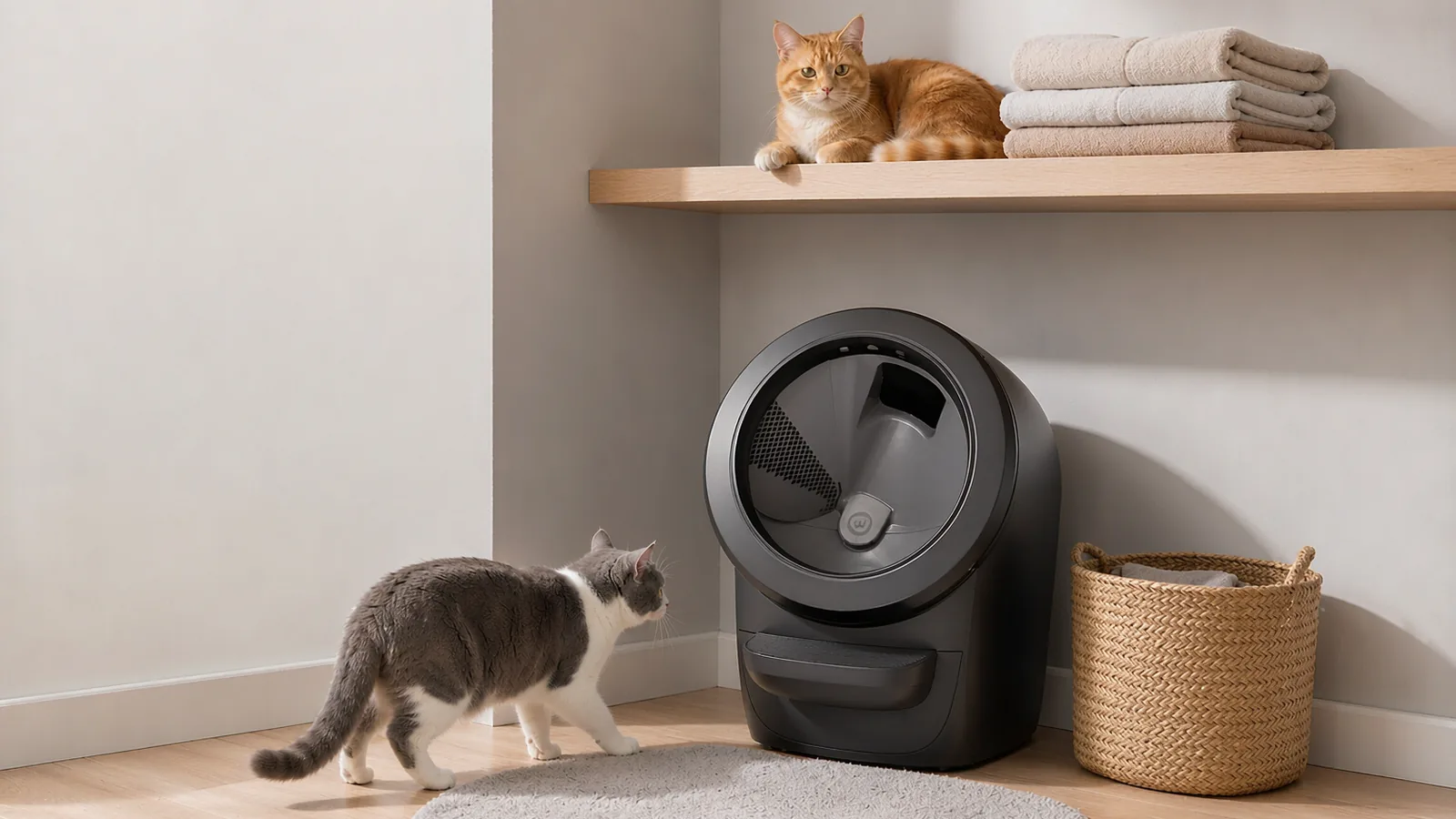
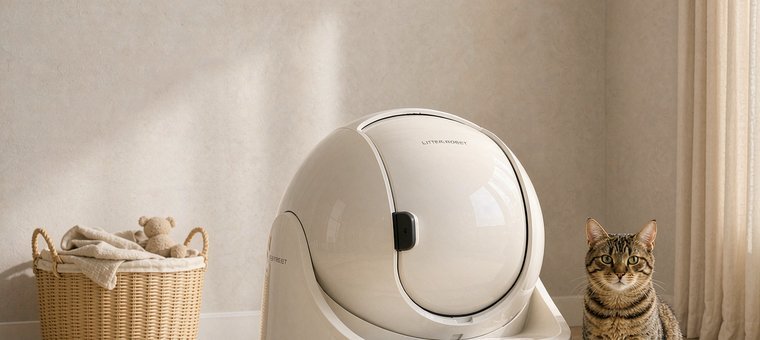
Our Premium Primary-Box Pick to Compare: Litter-Robot 4 — one of the most widely recognized self-cleaning litter boxes and a leading premium option to compare for a multi-cat flagship unit.
 Click to zoom
Why we picked it: Self-cleaning litter boxes have a history of being scary, smelly, or both. For multi-cat homes, the Litter-Robot 4 is a leading premium option to compare when you prioritize a connected ecosystem, automatic cleaning, and a sealed waste-drawer design. Per Whisker’s published specifications, its safety sensors are designed to pause or prevent a cleaning cycle when the unit detects a cat or obstruction, and the sealed waste drawer supports odor management.
Multi-cat capacity is not the same as multi-cat access: a unit may handle the waste volume of several cats, but it does not replace separate, accessible litter locations for cats that compete, avoid enclosed units, or need lower entry access.
Best for: Cat parents who travel, work long hours, or want to reduce daily scooping and routine litter maintenance — especially in multi-cat homes where safety and odor control matter most.
Key Specs
- Footprint: about 22 in W × 27 in D — measure the planned location and nearby clearance
- Waste drawer: manufacturer describes a large, sealed, carbon-filtered drawer; emptying frequency depends on cat count, litter type, and household use
- App: Whisker app (iOS + Android)
- Safety system: Whisker publishes laser, weight-sensor, and anti-obstruction features designed to detect cats and keep cycles from running when the globe is not clear
- Multi-cat use: designed for multi-cat households; weight-based tracking may be less useful when cats have similar weights
- Wi-Fi: requires a 2.4 GHz Wi-Fi signal; 5 GHz-only networks are not supported
Specifications are manufacturer-published and may vary by model revision, region, firmware, and testing conditions. Verify the current listing before ordering.
What Stands Out (Based on Specs + User Feedback)
- Its multi-layer sensor system is a key reason to compare it if you prioritize published safety features in a high-traffic area.
- Whisker describes its cleaning cycle as whisper-quiet; owner experiences can vary by room and floor type.
- Logs usage and weight-related trends across connected profiles (an observation aid to discuss with your veterinarian — not a diagnostic tool).
- No special litter required — works with standard clumping clay.
What Could Be Better
- Premium price (this is a luxury item).
- Large footprint — measure the planned location and nearby clearance before ordering.
NOT IDEAL IF: you need the lowest upfront cost or have very limited floor space.
CHECK BEFORE BUYING: measure the planned location including clearance around the unit; confirm your Wi-Fi setup and app compatibility; check current litter, liner, filter, and warranty requirements.
(Price and stock may change; always check the Amazon page.)
Going deeper: We break down the category benchmark in our Litter-Robot 4 review and rank every model worth considering in the best self-cleaning litter boxes.
2. PETKIT PuraMax 2 — Best Value Second Box
Not sure this fits? Use the setup finder.
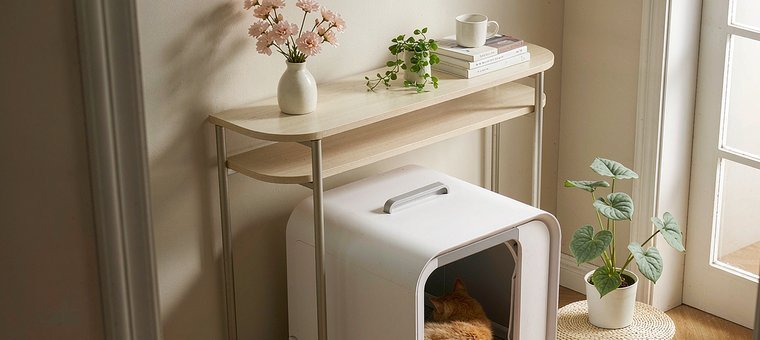
Our value pick: PETKIT PuraMax 2 — ideal as a second (or third) box in a multi-cat setup.
 Click to zoom
Why we picked it: A practical value-oriented model to compare for secondary locations. It auto-cleans, connects to an app, and uses PETKIT’s published odor-control design at a price that makes buying two or three far less painful than doubling up on LR4s — effectiveness varies by cat count, litter, and maintenance. In a multi-cat home where you need several boxes, the PuraMax 2 lets you cover the house without requiring several flagship-priced units.
Best for: Multi-cat owners who need 2–4 boxes and want to control cost while keeping odor and maintenance manageable.
Key Specs
- Interior cylinder: 76L published interior capacity — one of the largest in its price class
- Waste bin: PETKIT materials describe a 7L waste bin; single-cat emptying claims are manufacturer/lab estimates and shorten substantially in multi-cat use
- Published cat range: approximately 3.3–22 lb; confirm the current listing for regional model details
- Safety: PETKIT describes an xSecure safety system using infrared and weight-related detection; review the current model’s published sensor configuration before buying
- App: PETKIT app (iOS + Android)
- Litter: Works with most clumping litters
Specifications are manufacturer-published and may vary by model revision, region, firmware, and testing conditions. Verify the current listing before ordering.
What Stands Out (Based on Specs + User Feedback)
- Large 76L interior means less frequent emptying than smaller bins — though multi-cat use shortens any manufacturer’s single-cat estimates.
- Solid app experience with cycle logs and drawer-level indicators.
- Strong value pick below the premium tier, making it realistic to buy multiple units.
What Could Be Better
- Sensor and software polish may lag the premium tier — compare current app reviews.
- Best used as a secondary box in slightly lower-traffic areas.
NOT IDEAL IF: you have a very small kitten, a cat with mobility limitations, or cannot accommodate the entry height and footprint.
CHECK BEFORE BUYING: confirm your cat is within the published 3.3–22 lb range; plan for a level hard-floor location and 2.4 GHz Wi-Fi; review current consumable and replacement-part availability.
(Price and stock may change; always check the Amazon page.)
Going deeper: See how it stacks up in our best self-cleaning litter boxes ranking.
3. PETKIT Purobot Max Pro 2 — Best With Monitoring
Not sure this fits? Use the setup finder.
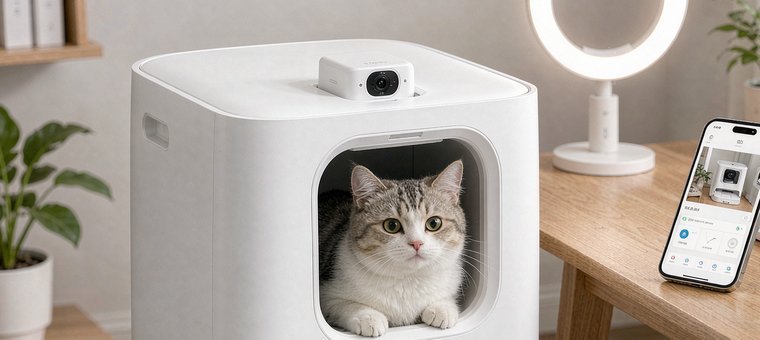
Our monitoring pick: PETKIT Purobot Max Pro 2 — for owners who want data, not just automation.
 Click to zoom
Why we picked it: The PETKIT Purobot Max Pro 2 adds a built-in camera, which is especially handy in multi-cat homes where you want to know which cat is using the box and how often. Best for households that want additional litter-box usage visibility, particularly when they are already tracking a cat’s habits with a veterinarian. App data may help you notice changes worth discussing with a veterinarian — it does not diagnose urinary, digestive, or other medical conditions.
Best for: Households that want additional litter-box activity visibility, especially when they are already monitoring a cat’s habits with their veterinarian.
Key Specs
- Built-in camera with AI health monitoring
- Largest capacity in the PETKIT line
- App: PETKIT app with per-cat logs
Specifications are manufacturer-published and may vary by model revision, region, firmware, and testing conditions. Verify the current listing before ordering.
What Stands Out (Based on Specs + User Feedback)
- Camera + AI helps track which cat is using the box and flags unusual patterns.
- Large capacity suitable for multi-cat use.
- Good option when you care about health data, not just “no scooping.”
What Could Be Better
- Price pushes into premium territory — better as a primary box for a cat with health needs than as a bulk buy.
- For general coverage, the standard PuraMax 2 does the same cleaning for less.
NOT IDEAL IF: you don’t need monitoring — the standard PuraMax 2 performs the same core cleaning job for less.
CHECK BEFORE BUYING: review camera, app, subscription, and privacy terms before buying; confirm the footprint fits your planned corner; compare whether the standard PuraMax 2 covers your needs for less.
(Price and stock may change; always check the Amazon page.)
4. Neakasa M1 — Best for Tracking Control
Not sure this fits? Use the setup finder.
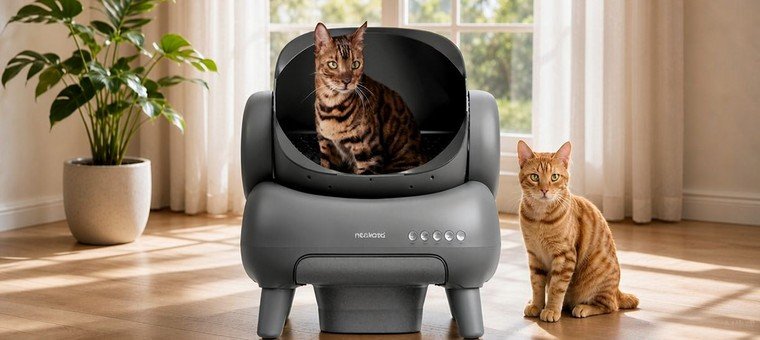
Our anti-tracking pick: Neakasa M1 — an open-top design that helps keep litter where it belongs.
 Click to zoom
Why we picked it: The Neakasa M1’s open-top layout is a quiet hero in multi-cat homes because litter tracking multiplies with more cats. The open, high-sided design helps keep stray granules contained near the entry, so you’re not sweeping around four boxes instead of one. It auto-sifts and notifies via app, sitting at a sensible mid price.
Best for: Multi-cat homes where litter tracking is a major pain point and most cats are young/agile.
Key Specs
- Open-top design to help reduce scattered litter
- Auto-sift + app notifications
- Published entry height: about 13.9 in — worth checking against senior or mobility-limited cats
Specifications are manufacturer-published and may vary by model revision, region, firmware, and testing conditions. Verify the current listing before ordering.
What Stands Out (Based on Specs + User Feedback)
- Its open, high-sided layout is designed to help contain litter, but results vary with litter type, digging style, and whether you use a mat.
- Open-top design can feel less intimidating for some cats.
- The open design may make visual inspection and routine wiping more straightforward for some households.
What Could Be Better
- Its relatively high entry may be less comfortable for senior, arthritic, or mobility-limited cats.
- Best reserved for agile youngsters; keep an open or low-entry box for older cats.
NOT IDEAL IF: senior or mobility-limited cats need a low-entry option instead — the published entry height is about 13.9 in.
CHECK BEFORE BUYING: check the entry height against your cats; confirm compatibility with your clumping litter; plan for mats and waste-bag supplies on a level floor near an outlet.
(Price and stock may change; always check the Amazon page.)
5. PetSafe ScoopFree SmartSpin — Best Open Option
Not sure this fits? Use the setup finder.
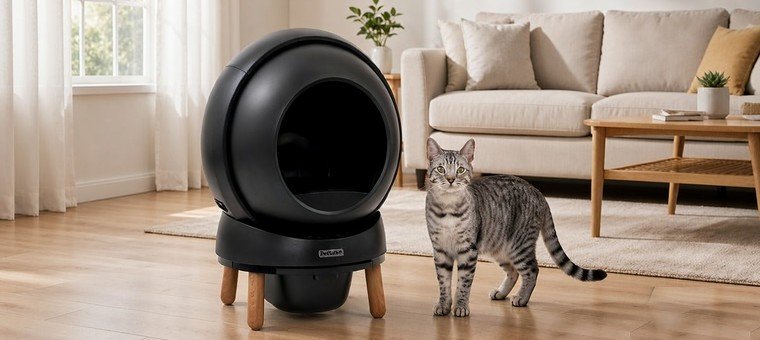
Our open-style pick: PetSafe ScoopFree SmartSpin — for cats that may be reluctant to use enclosed designs.
 Click to zoom
Why we picked it: The PetSafe ScoopFree SmartSpin offers a more open, rotating design that some cats — especially those wary of enclosed globes — will actually use. In a multi-cat home you inevitably get one finicky cat, and having at least one open-style box prevents that cat from avoiding the automatics entirely. PetSafe’s long track record in the category is worth weighing.
Best for: Households with at least one cat that refuses enclosed boxes; use as part of a mixed fleet.
Key Specs
- Open, rotating design
- Litter: compatible with clumping litter, according to PetSafe’s current product page
- Waste drawer: published 6L sealed, deodorized drawer; emptying intervals depend on the number of cats and litter use
- Access: about 12 in from the ground; consider this for senior or mobility-limited cats
- App: Wi-Fi-enabled monitoring features are listed on PetSafe’s current product page
- Rotating mechanism — review moving-part warranty and consumables before ordering
Specifications are manufacturer-published and may vary by model revision, region, firmware, and testing conditions. Verify the current listing before ordering.
What Stands Out (Based on Specs + User Feedback)
- More open feel than globe-style boxes — better for reluctant cats.
- The sealed, deodorized 6L waste drawer supports odor containment — effectiveness varies with cat count, litter type, and maintenance.
- Compare the current warranty, replacement-part availability, and support terms before ordering — they vary by retailer and model year.
What Could Be Better
- Less of a tech showcase than LR4 or PETKIT camera models.
- Best as a complementary box in a diversified setup, not your only unit.
NOT IDEAL IF: you want one unified app ecosystem or zero recurring consumables.
CHECK BEFORE BUYING: watch how your cat reacts to the rotating motion; confirm your cat is within the published weight limit (about 25 lb); review the current listing for litter compatibility and included consumables; confirm 2.4 GHz Wi-Fi for app features.
(Price and stock may change; always check the Amazon page.)
Odor Control Strategy for Multiple Cats
Odor is the make-or-break factor with several cats, and the strategy is layered:
- Enough boxes: spreading units across rooms stops any one area from becoming a smell hotspot.
- Sealed, filtered waste drawers: the LR4 and PETKIT models both seal waste quickly, which makes them worth comparing for households prioritizing waste containment.
- Consumables: carbon filters and optional odor pods extend the fresh window, and they may be worth considering, depending on your odor priorities and ongoing budget.
Ventilation helps too. Place boxes where air moves, not in a sealed closet, and consider a charcoal-based enclosure if aesthetics demand hiding them. Our related cat litter box enclosure furniture guide covers benches sized for automatics.
Pair the setup with vertical space: a large cat tree for multiple cats gives each cat a perch and reduces the territorial pressure that drives litter-box avoidance.
Introducing Multiple Cats to Automatic Boxes
Cats are creatures of habit, so a phased rollout beats ripping out every manual box on day one.
- Keep at least one familiar box available while the automatics are introduced.
- Allow cats to investigate the new unit at their own pace, and keep familiar boxes available during the transition — acceptance time varies by cat.
- Run a cycle while they watch from a doorway so the motion becomes routine rather than a fright.
With several cats, stagger the introductions if you’re adding multiple units at once; introducing several unfamiliar moving devices at once may make the transition harder for some cats. Keep the old boxes until every cat reliably uses the automatics, then retire them. Use app logs as one observation aid — while continuing to watch each cat’s comfort and behavior — before you remove the backup box.
Budgeting for a Multi-Cat Fleet
Buying several automatic boxes is a real upfront investment — one that may be easier to evaluate when compared with expected maintenance, consumables, and household convenience over time.
A mixed fleet — one premium LR4 plus two or three PETKIT PuraMax 2 units — typically costs far less than three LR4s while still covering the house. Factor in recurring consumables: waste-drawer liners, carbon filters, and optional odor pods, which add up faster with more cats and more boxes.
The potential benefit is less daily scooping and more frequent waste removal. In a three- or four-cat home, manual scooping several times a day is a real quality-of-life tax, and automatic boxes convert that into occasional liner swaps and app glances.
For the wider context on building a connected, low-maintenance cat home, our best smart pet gear of 2026 roundup maps the category, and the large cat tree for multiple cats guide helps you add vertical territory that keeps the peace.
FAQ
What is the best automatic litter box for multiple cats?
For a premium primary box, start by comparing the Litter-Robot 4, a leading connected option with published safety features and a sealed waste-drawer design, supported by PETKIT PuraMax 2 units as cost-effective second boxes. The right setup depends on your cats’ sizes, mobility, and preferences — treat “one box per cat, plus one” as a starting point, not a rule.
How many automatic litter boxes do I need for two cats?
Start with three accessible litter locations: one per cat plus one extra is a common household guideline. Not all three need to be automatic. A practical setup may be one automatic unit in the busiest area plus separate backup boxes in other rooms. Watch whether both cats use the boxes comfortably, especially if they differ in age, mobility, or confidence.
Do self-cleaning boxes handle the odor of several cats?
They can reduce odor by removing clumps more quickly and containing waste in a sealed drawer, but results still depend on the number of boxes, room ventilation, litter type, cleaning frequency, and how many cats use each unit. Automatic boxes reduce daily scooping; they do not eliminate routine cleaning or the need to empty waste drawers.
Is the Litter-Robot 4 safe with multiple cats using it?
Whisker describes the Litter-Robot 4 as using laser, weight-sensor, and anti-obstruction features designed to prevent a cycle from running when a cat or obstruction is detected. Follow the manufacturer’s setup instructions, supervise the introduction period, and do not rely on a single unit as the only accessible litter option for cats that compete or avoid enclosed designs.
Can I use one automatic box for three cats?
One automatic unit may handle more waste than a manual box, but it can still become a bottleneck if three cats prefer the same location or if one cat guards access. For most multi-cat households, use one box per cat plus one extra as a starting point, spread locations apart, and use automation to reduce cleaning work rather than to reduce every cat’s access to litter boxes.
Our Pick: A Setup, Not a Single Machine
For most multi-cat households, the goal is not to find one machine that replaces every litter box. It is to build a setup that gives each cat reliable access while reducing daily scooping and odor-management work.
- Primary box: Start by comparing the Litter-Robot 4 for the busiest litter area if you value its connected ecosystem, published safety features, and sealed waste-drawer design.
- Secondary locations: Consider PETKIT PuraMax 2 when broader multi-room coverage matters more than buying multiple flagship units.
- Optional additions:
- Neakasa M1 if litter tracking is a major issue
- PetSafe ScoopFree SmartSpin for a cat reluctant to use enclosed designs
- During any transition: Keep at least one familiar, accessible backup box — especially if a cat is senior, mobility-limited, shy, or reluctant to use enclosed designs.
Check current product specifications, litter compatibility, warranty terms, and recurring consumable costs before buying. The best setup is the one every cat will use comfortably — not simply the most automated option.
(Prices and stock can change; always verify on Amazon.)
Want more multi-cat setup guides like this? Join our newsletter at HiPetTech’s about page for new reviews and deals.
Updated September 2026: reviewed current product availability, product specifications, and the multi-cat comparison table.
Disclosure & Transparency
This post contains affiliate links to Amazon and other retailers. As an Amazon Associate, we earn from qualifying purchases at no extra cost to you. This site is research-based: recommendations are built from brand specifications, large-scale user reviews, long-term feedback in pet communities, and reliability signals such as firmware updates and parts availability. We do not claim personal in-house testing of every unit. Prices and stock levels can change at any time; always verify on the retailer’s page before purchasing. Read our full editorial and affiliate policy →